A first-hand account from the steppes of Central Asia, where one of the world’s last major nanhong agate deposits lies hidden.
Author’s Note: This article is based on my personal visit to the Kazakhstan nanhong mining region in early 2024. Names of some local partners have been changed for privacy. All technical information has been verified against geological surveys and industry standards.
Chapter 1: Why I Went
The idea had been circling in my head for almost two years.
It started with a phone call in late 2022. A supplier mentioned something unusual: “There’s a new nanhong source in Kazakhstan. Big deposits. Good quality. You should check it out.”
I was skeptical. As someone who’d worked with gemstones for over a decade, I’d heard countless stories about “new discoveries.” Most turned out to be exaggerated marketing or short-lived veins.
But this time was different.
By early 2023, samples started appearing in Guangzhou’s jewelry markets. The material was legitimate — deep red colors, natural flame patterns, and most importantly, no signs of treatment. Lab tests confirmed it: natural nanhong agate from Kazakhstan.
The real question wasn’t whether the material existed. It was: Could we build a sustainable supply chain from one of the world’s most remote mining regions?
That’s what brought me to this moment — standing in a dusty office in Almaty, waiting for a train that would take me 1,200 kilometers northwest into the Kazakh steppes.
Chapter 2: The Long Road West
Guangzhou → Ürümqi → Alashankou
The journey began with a 5-hour flight from Guangzhou to Ürümqi, the capital of China’s Xinjiang region. From there, I met up with two companions:
- Old Chen — A gemstone miner with 20+ years of experience in Sichuan and Yunnan provinces. He’d agreed to come along to assess the mining operations.
- Aer Tai — A Kazakh guide and translator, born in the border region between China and Kazakhstan. His family had connections on both sides.
We boarded the international train at Alashankou, the last major stop before crossing into Kazakhstan. The border formalities took nearly three hours — passport checks, customs declarations, and endless paperwork.
Travel Note: The China-Kazakhstan border crossing at Alashankou is one of the busiest freight routes on the New Silk Road. Passenger trains run three times weekly, but schedules can be unpredictable.
Into the Steppes
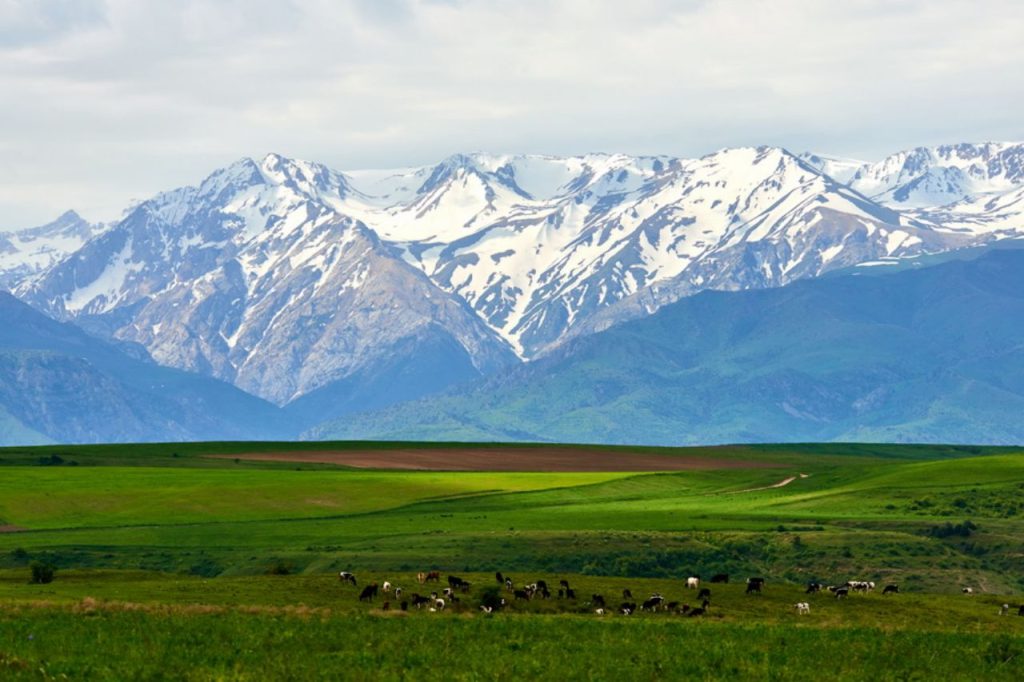
As the train pulled out of the station, the landscape transformed dramatically.
The rugged mountains of Xinjiang gave way to endless grasslands — flat, golden-brown steppes stretching to the horizon in every direction. In the distance, snow-capped peaks of the Tian Shan mountains glowed pink in the setting sun.
Aer Tai pointed out the window: “See those hills? That’s where we’re heading. The mining area is in the Karaganda region — about 6 hours from the border.”
The train compartment was basic but clean. Our fellow passengers were mostly local traders and workers heading home. None spoke English, but gestures and smiles bridged the gap. An elderly Kazakh woman shared dried yogurt curds and strong black tea — hospitality that would become a recurring theme on this journey.
Chapter 3: First Sightings
Arrival at the Mine
We arrived at the mining camp just before dusk on the third day.
The site sat in a shallow valley, surrounded by low hills. A dozen temporary structures dotted the landscape — corrugated metal sheds, canvas tents, and a few prefabricated buildings. Heavy machinery was parked in a line: two excavators, a loader, and several dump trucks.
Nurlan, the mine operations manager, greeted us at the entrance. He was a stocky man in his late 40s, with weathered features and a firm handshake.
“Welcome,” he said in accented Mandarin. “You’re the first Chinese buyers to visit since the new equipment arrived. Let me show you around.”
The Raw Material
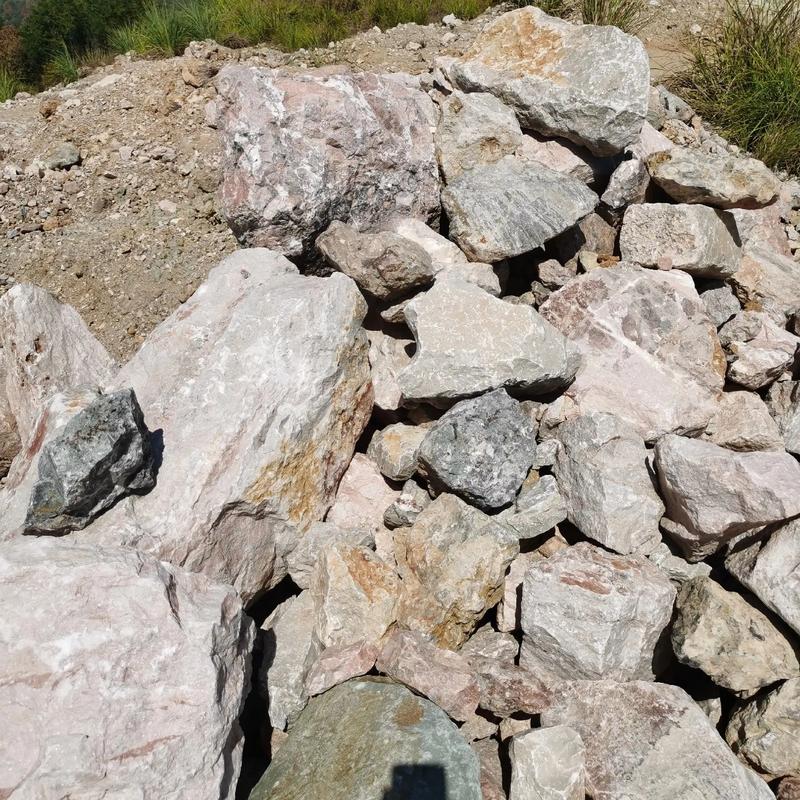
Nurlan led us to a covered storage area where freshly mined ore was piled in waist-high heaps. I crouched down to examine a piece.
The raw stone was heavier than I expected — dense, with a rough gray-brown exterior. But where the surface had broken, I could see flashes of deep red.
Old Chen picked up a larger chunk, turning it in his hands. “Look at this,” he said, pointing to a vein running through the rock. “The color penetration is good. Not just surface staining — it goes deep.”
He was right. The red coloration extended throughout the stone’s interior, not just in thin layers. This was a strong indicator of natural formation.
Nurlan explained: “We’ve been mining here since 2019. The deposit runs along this valley for about 3 kilometers. Depth varies — some areas are 20 meters down, others go to 50 meters.”
Daily output: 2-3 tons of raw ore
Gem-grade yield: Approximately 15-20%
Remaining material: Used for lower-grade products or decorative stone
Chapter 4: The Open Pit
At the Excavation Site
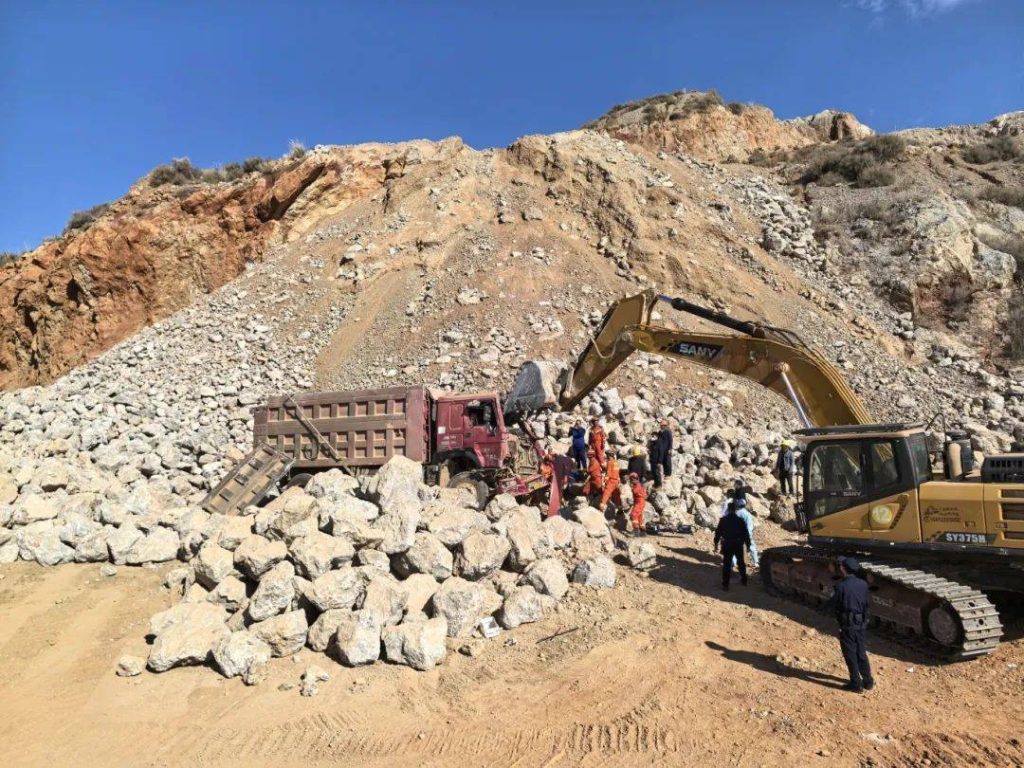
We drove 10 minutes up the valley to the main excavation site.
What came into view was a large open pit — a terraced excavation carved into the hillside, about 100 meters wide and 30 meters deep. Two excavators were at work, carefully scraping away layers of overburden to expose the ore-bearing rock beneath.
“This is our primary extraction area,” Nurlan explained. “The nanhong veins run horizontally through this hillside. We remove the topsoil first, then excavate the ore layer.”
The open-pit method made sense for this type of deposit. Unlike deep-shaft mining for coal or metals, gemstone extraction requires careful removal of material to preserve the integrity of the stone.
Mining method: Open-pit excavation
Pit dimensions: Approximately 100m × 50m × 30m deep
Equipment: 2 excavators, 1 loader, 3 dump trucks
Daily output: 2-3 tons of raw ore
Working the Vein
One of the excavator operators, a man named Batyr, paused to talk during a break. Through Aer Tai’s translation, I learned he’d been working at this mine for three years.
“The work is hard, but the pay is better than farming,” he said. “We excavate carefully — no blasting. The stone is valuable, so we can’t damage it.”
This explained the slow, methodical approach I’d observed. Unlike coal or metal mining, gemstone extraction requires precision to preserve the material’s integrity.
Old Chen walked to the edge of the pit and examined the exposed rock face. The nanhong vein was clearly visible — a band of reddish material about 30 centimeters thick, sandwiched between layers of gray host rock.
“This is good,” he muttered. “The vein is continuous. Not just pockets or scattered nodules.”
Geologically, this made sense. The Kazakhstan nanhong deposits formed in volcanic rock cavities during the Permian period, roughly 250-300 million years ago. Silica-rich solutions filled fractures and voids, slowly crystallizing into agate over millions of years.
The red coloration came from iron oxide (hematite) inclusions — the same geological process that creates Chinese nanhong, but in a different geographic setting.
Working conditions:
- Shift length: 8 hours (rotating shifts)
- Weather dependent (operations pause during heavy rain/snow)
- Safety: Regular slope stability checks
- Environmental: Topsoil preserved for land restoration
Chapter 5: The Sorting Yard
Grading by Eye
Back on the surface, we visited the sorting yard where mined ore was graded and categorized.
Workers sat at long tables under canvas awnings, examining each piece of ore under natural light. The sorting process was entirely manual — no machines, no automated scanners.
Grading criteria:
- Color intensity — Deeper, more saturated reds command premium prices
- Pattern quality — Flame patterns and unique formations increase value
- Crack density — Fewer fractures mean higher yield for cutting
- Size — Larger pieces suitable for carvings or large cabochons
I watched a worker pick up a piece, examine it from multiple angles, then place it into one of four bins labeled A, B, C, and D.
“Grade A is maybe 5% of total output,” Nurlan explained. “Grade B is 15%. The rest is C and D — still usable, but for different markets.”
The Flame Pattern Discovery
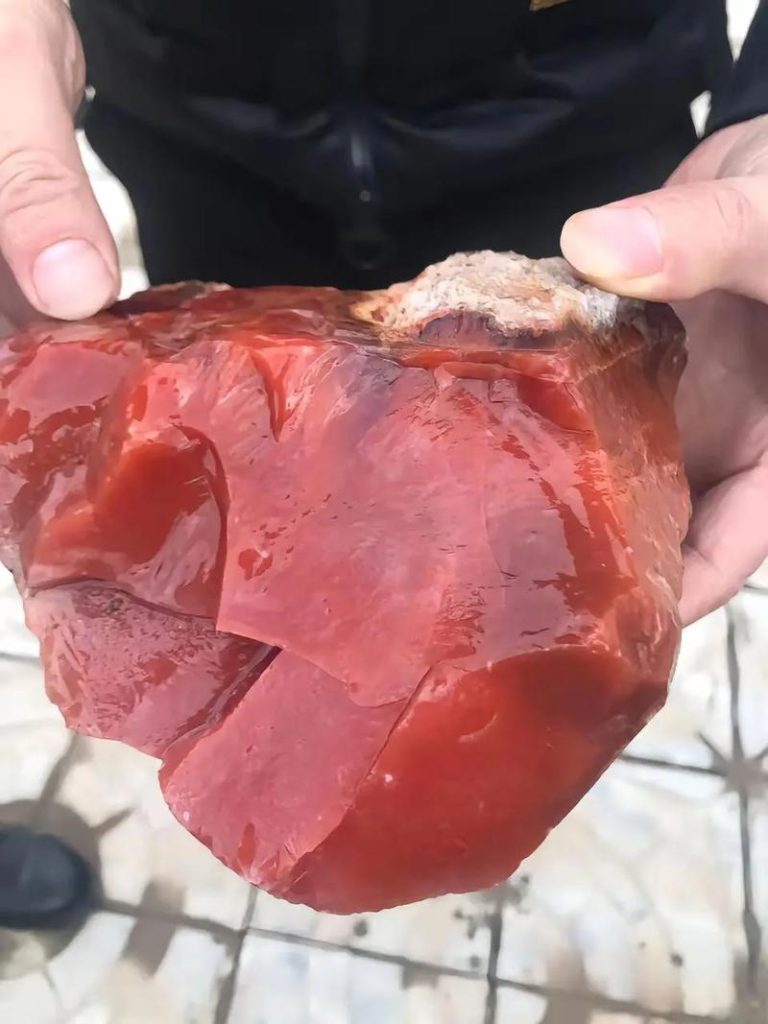
Nurlan led me to a separate table where special pieces were displayed. These showed the distinctive flame pattern (火焰纹) that makes nanhong agate so coveted.
Under the light, the patterns seemed to move — red swirls dancing within a white or translucent base. Each piece was completely unique.
“This one,” Nurlan said, holding up a fist-sized piece, “is top quality. Look at the pattern — clear, defined, with good contrast.”
He was right. The flame pattern in this specimen was exceptional — bold red “tongues” extending into a milky white background, with sharp definition and three-dimensional depth.
“How often do you find pieces like this?” I asked.
“Maybe one in a hundred,” he said. “Sometimes less.”
This scarcity explained why flame pattern nanhong commands such high prices in the collector market.
Chapter 6: Stories Over Tea
An Evening at Nurlan’s Home
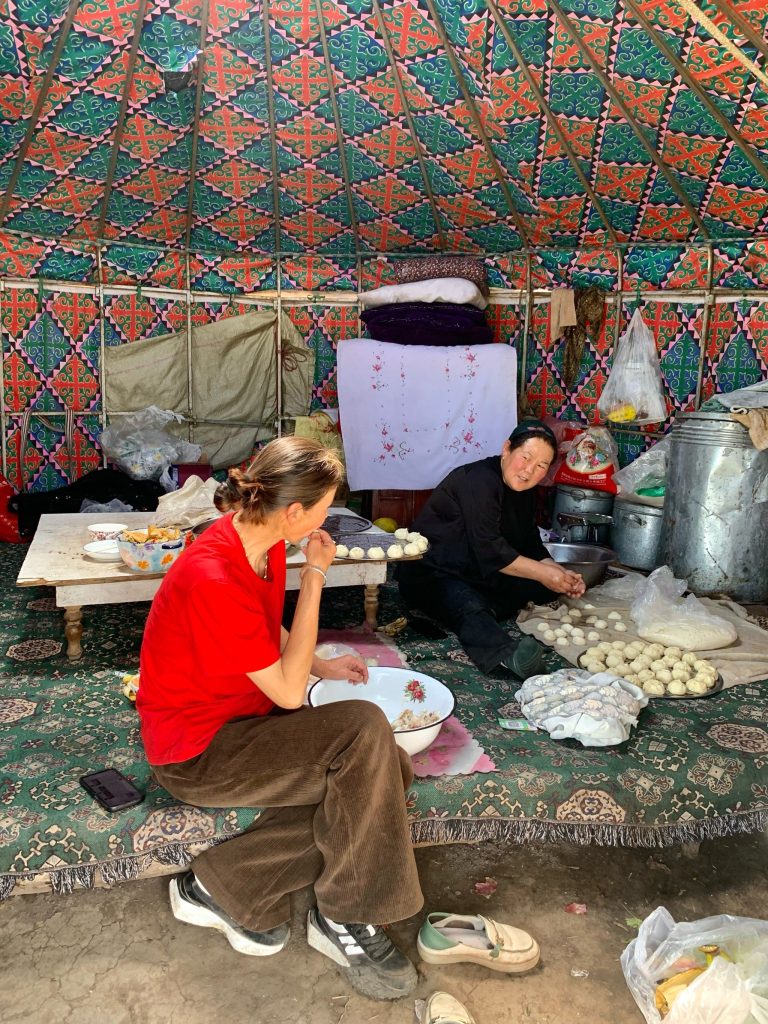
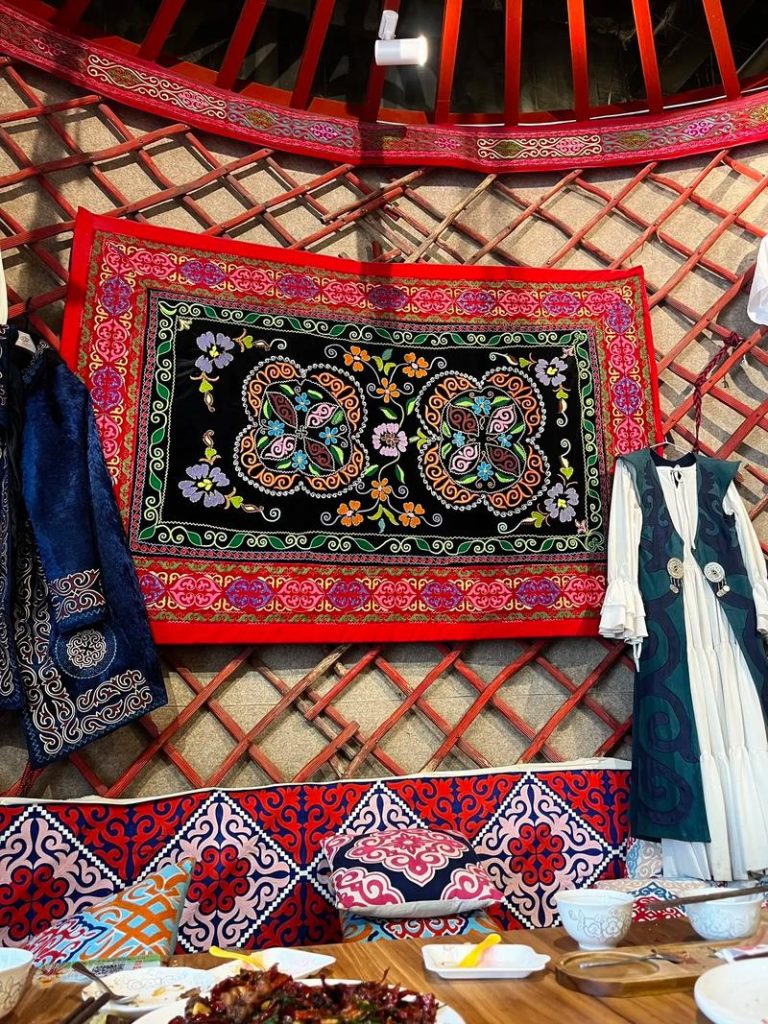
On our third evening, Nurlan invited us to his home for dinner — a traditional Kazakh yurt about 2 kilometers from the mine.
The yurt was warm and brightly lit, with colorful rugs covering the floor and walls. A large portrait of the Kazakh president hung near the entrance. Nurlan’s wife, Gulnara, greeted us with bowls of hot tea and a platter of traditional snacks: dried fruits, nuts, and flaky bread.
Through Aer Tai’s translation, we talked for hours — about family, business, and the strange journey that brought Chinese buyers to the Kazakh steppes.
A Cultural Perspective on Stone
Gulnara was curious about why Chinese customers valued red stone so highly.
“In our culture,” she said, “we appreciate many colors — blue for sky, green for grass, white for purity. But red… red is special. It’s fire, it’s blood, it’s life.”
I explained the Chinese cultural significance of red — good fortune, joy, prosperity. Nanhong agate’s deep red color made it especially meaningful for jewelry and carvings.
Nurlan nodded thoughtfully. “So when Chinese people wear this stone, it’s not just decoration. It has meaning.”
“Yes,” I said. “It’s cultural, spiritual, and also an investment.”
This conversation highlighted something important: The value of nanhong agate transcends mere aesthetics. It’s embedded in cultural narratives, historical traditions, and shared symbolism.
The Future of the Mine
As the evening wore on, our conversation turned to business.
“We want to work with you long-term,” Nurlan said. “Not just buy and sell, but build something stable.”
He outlined his vision:
- Consistent monthly supply (50-80 tons)
- Quality grading at the source
- Direct shipping to Guangzhou
- Fair pricing based on market conditions
“We’re not looking for quick profits,” he emphasized. “We want to build trust. Your company, our mine — partners.”
This aligned perfectly with what we were seeking. A stable, transparent supply chain from source to market.
Before we parted that night, we shook hands on a verbal agreement. The formal contracts would come later, but the foundation had been laid.
Chapter 7: Reflections on the Journey Home
The Train Ride Back
The return journey gave me time to process everything I’d seen.
Sitting in the train compartment, watching the steppes roll by, I reflected on the key takeaways from this trip:
1. The Deposit Is Real and Substantial
This wasn’t a small, short-lived vein. The Kazakhstan nanhong deposit extends for kilometers, with significant depth. Based on geological surveys and current extraction rates, the mine could sustain operations for 10-15 years minimum.
2. Quality Is Legitimate
I’d seen the entire process — from excavation to sorting. The material was genuinely natural, with no treatments applied at the mining stage. Lab certifications from NGTC and other institutions confirmed this.
3. Supply Chain Challenges Are Real
The remoteness of the mining region created logistical complexities:
- Long transport times (5-7 days from mine to Guangzhou)
- Border crossing delays
- Limited infrastructure at the mining site
These challenges added cost but weren’t insurmountable.
4. People Matter
Perhaps the most important insight: This business is built on relationships. Nurlan, Batyr, Gulnara — these weren’t just suppliers. They were partners in creating something sustainable.
Why “Untreated” Matters
One observation stayed with me throughout the journey.
At every stage — from the mine face to the sorting yard to the final products — there was a consistent commitment to preserving the natural state of the stone.
No dyeing. No resin injection. No heat treatment. No acid washing.
Only physical processing: cutting, grinding, polishing.
This wasn’t just marketing. It was a philosophical choice — one that aligned with growing consumer demand for transparency and authenticity.
Industry Context: According to NGTC’s 2025 annual report, over 80% of nanhong agate submitted for testing showed indications of treatment. The Kazakhstan material represented a rare exception — genuinely natural stone from source to finish.
The 100-Ton Question
Before leaving, I’d asked Nurlan about inventory levels.
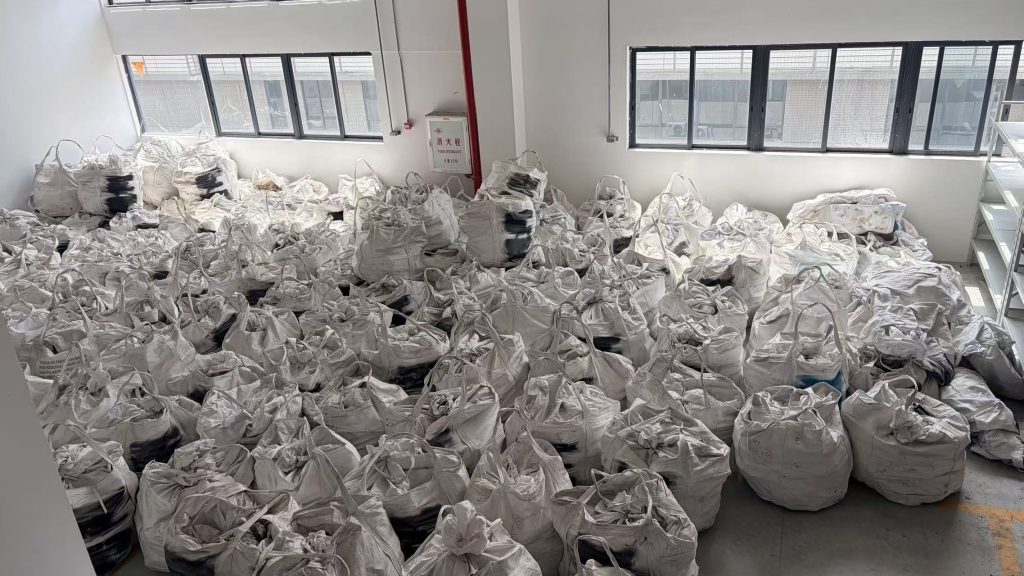
“We have about 100 tons of raw ore stockpiled,” he said. “Plus finished inventory — beads, cabochons, carvings. Maybe another 80,000-100,000 pieces.”
This was significant. Most gemstone suppliers operate hand-to-mouth, with limited inventory. A 100-ton stockpile represented supply stability — the ability to fulfill large orders consistently without waiting for new mining output.
For Forever Star Jewelry, this inventory became a strategic advantage:
- Reliable fulfillment for wholesale customers
- Consistent quality across batches
- Ability to offer competitive pricing (volume purchasing)
- Long-term business planning without supply uncertainty
Chapter 8: From Mine to Market
The Forever Star Commitment
Six months after that first visit, the partnership was formalized.
Forever Star Jewelry became the exclusive distributor for Kazakhstan primary ore nanhong agate in the Chinese market. The commitment was clear:
Product Standards:
- 100% natural material (verified by NGTC certification)
- No chemical or thermal treatments
- Full traceability from mine to finished product
- Transparent grading and pricing
Supply Commitments:
- Monthly supply: 50-80 tons of raw ore
- Inventory buffer: 100 tons raw ore + 100,000 finished pieces
- Quality consistency through direct oversight
- Fair pricing based on long-term partnership
Customer Promise:
Every Forever Star nanhong agate product includes:
- NGTC certification confirming natural, untreated status
- Origin documentation (Kazakhstan)
- Full traceability records
- Satisfaction guarantee with return policy
Why This Matters for Buyers
For collectors, jewelry designers, and wholesale buyers, the Kazakhstan nanhong supply represents something rare in today’s market: Genuine natural material at scale.
Consider the alternatives:
- Chinese nanhong (Sichuan, Yunnan): Increasingly rare due to mining restrictions; high prices; treatment prevalence
- Other agate sources: Often dyed or treated; inconsistent quality; limited supply
- Synthetic materials: No investment value; lacks cultural significance
Kazakhstan nanhong offers a third path: natural, untreated stone with stable supply and verified authenticity.
Epilogue: The Next Chapter
As I write this in early 2026, the Kazakhstan nanhong project has exceeded our initial expectations.
Achievements:
- Consistent monthly supply maintained for 18+ months
- Zero quality disputes or certification failures
- Growing recognition among collectors and designers
- Expanding product range (beads, cabochons, carvings, custom pieces)
Looking Ahead:
- New mining equipment increasing efficiency
- Expanded sorting facilities improving grading accuracy
- Direct partnerships with jewelry designers
- Educational initiatives about natural vs. treated nanhong
The journey from that first skeptical phone call to today’s stable supply chain has been remarkable. But the real story isn’t about business metrics or inventory numbers.
It’s about people — miners, traders, gemologists, designers, collectors — all connected through their appreciation for this extraordinary stone.
And it’s about preservation — maintaining the integrity of natural material in a market increasingly dominated by treatments and shortcuts.
Key Takeaways for Readers
For Collectors:
- Kazakhstan nanhong is a legitimate, natural alternative to Chinese sources
- Flame pattern specimens represent the premium tier (5% of output)
- NGTC certification is essential for verification
- Natural, untreated stone maintains value better than treated material
For Jewelry Designers:
- Stable supply enables consistent production planning
- Multiple grades available for different price points
- Custom sizing and shaping available through direct partnership
- Quality consistency across batches
For Wholesale Buyers:
- Volume pricing advantages through direct sourcing
- Inventory depth reduces fulfillment delays
- Certification included with all products
- Transparent grading system
For Everyone:
- Natural nanhong agate is a finite resource
- Treatment prevalence makes certification critical
- Origin matters — Kazakhstan material has distinct characteristics
- Long-term value favors untreated, certified stone
Visiting the Mines: Practical Information
For readers considering their own visit:
Access:
- Nearest major city: Almaty, Kazakhstan
- Mining region: Karaganda Oblast (approximately 1,200 km from Almaty)
- Travel time: 3-4 days from China (including border formalities)
Requirements:
- Valid passport with Kazakhstan visa
- Border crossing permit (arranged through local partners)
- Mining site access authorization (must be arranged in advance)
- Russian or Kazakh language skills (or hire a translator)
Considerations:
- Remote location with limited amenities
- Harsh climate (extreme cold in winter, hot in summer)
- Basic accommodation at mining camp
- Limited medical facilities nearby
- Open-pit site requires sturdy footwear and sun protection
Recommendation: First-time visitors should arrange visits through established partners. Independent travel to the mining region is not recommended without local contacts.
About Forever Star Jewelry
Forever Star Jewelry (广州众星珠宝有限公司) specializes in natural, untreated gemstones sourced directly from mining regions.
Core Products:
- Kazakhstan Primary Ore Nanhong Agate
- Natural gemstone beads and cabochons
- Custom carvings and jewelry components
- Certified collector specimens
Quality Commitment:
- 100% natural materials (verified by NGTC)
- No dyeing, resin injection, heat treatment, or acid washing
- Full traceability from mine to market
- Competitive wholesale pricing
Contact:
- Location: Guangzhou, China
- Showroom: By appointment
- Online: Product catalogs available upon request
- Certification: NGTC certificates included with all products