Your authoritative reference for understanding nanhong agate color grades, pattern classifications, and value assessment based on Kazakhstan primary ore standards.
Editor’s Note (April 2026): This guide is based on Forever Star Jewelry’s Kazakhstan primary ore nanhong agate color card standards, developed from direct mining source materials. Color classifications follow industry-recognized grading systems. Last updated: April 7, 2026. All color references are from natural, untreated nanhong agate.
Introduction: Why Color and Pattern Matter
In the world of nanhong agate, color and pattern are the primary drivers of value.
Two pieces of identical size and weight can have vastly different prices based solely on:
- Color grade — from pale orange to deep palace red
- Pattern quality — from muddy to crisp flame patterns
- Color distribution — uniform vs. mottled
The Value Multiplier:
| Quality Factor | Value Impact |
|---|---|
| AAA Grade Color + Pattern | 10-15x base price |
| AA Grade Color + Pattern | 5-8x base price |
| A Grade Color + Pattern | 2-3x base price |
| Commercial Grade | Base price |
Example: An 8mm bead strand:
- Commercial grade: $180-360
- A grade: $540-1,620
- AA grade: $2,880-7,920
- AAA grade: $14,400-43,200
Understanding color and pattern grading isn’t just academic — it’s essential for making informed purchasing decisions and protecting your investment.
This guide provides:
- Complete color classification system — based on Kazakhstan primary ore standards
- Pattern grading framework — from flame patterns to landscape formations
- Value assessment criteria — what collectors and dealers look for
- Practical identification tips — how to evaluate color and pattern quality
Whether you’re a jewelry designer sourcing materials, a collector building your portfolio, or an investor evaluating opportunities, mastering color and pattern assessment is fundamental to success in the nanhong agate market.
标准卡1-1024x753.jpg)
Section 1: Nanhong Agate Color Classification System
1.1 The Forever Star Color Standard
Forever Star Jewelry has developed a comprehensive color classification system based on Kazakhstan primary ore nanhong agate — the world’s premier source of natural, untreated nanhong.
Our Color Card System:
Based on physical color cards developed from actual Kazakhstan primary ore samples, our system categorizes nanhong into three main grades:
- P1 — Top Grade Palace Red (顶级宫廷红) — Finest quality, pure saturated red
- P4 — Flame Pattern Series (火焰纹系列) — Distinctive red-white flame patterns
- P5 — Artistic/Scenic Series (意境款系列) — Unique landscape and special effect patterns
Additional Color Varieties:
- Rose Red tones (pinkish-red with purple undertones)
- Cherry Red tones (bright orange-red)
- Specialty materials: Ice floating, Lychee jelly, Black-red materials
Each grade represents specific quality characteristics and market positioning.
样品卡-1024x753.jpg)
1.2 Forever Star Classification System — P1, P4, P5
Overview:
Forever Star Jewelry has developed a practical classification system based on Kazakhstan primary ore characteristics, focusing on three main categories:
The Three-Tier System:
| Grade | Category | Characteristics |
|---|---|---|
| P1 | Top Grade Palace Red | Finest quality, pure saturated red |
| P4 | Flame Pattern Series | Distinctive red-white flame patterns |
| P5 | Artistic/Scenic Series | Unique multi-effect, landscape patterns |
P1: Top Grade Palace Red (顶级宫廷红)
Characteristics:
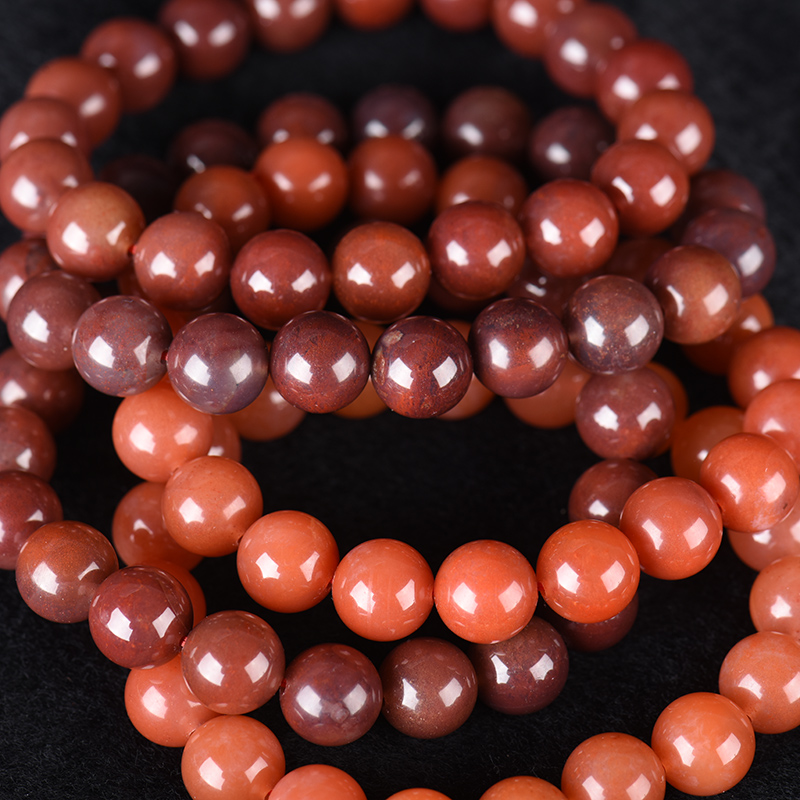
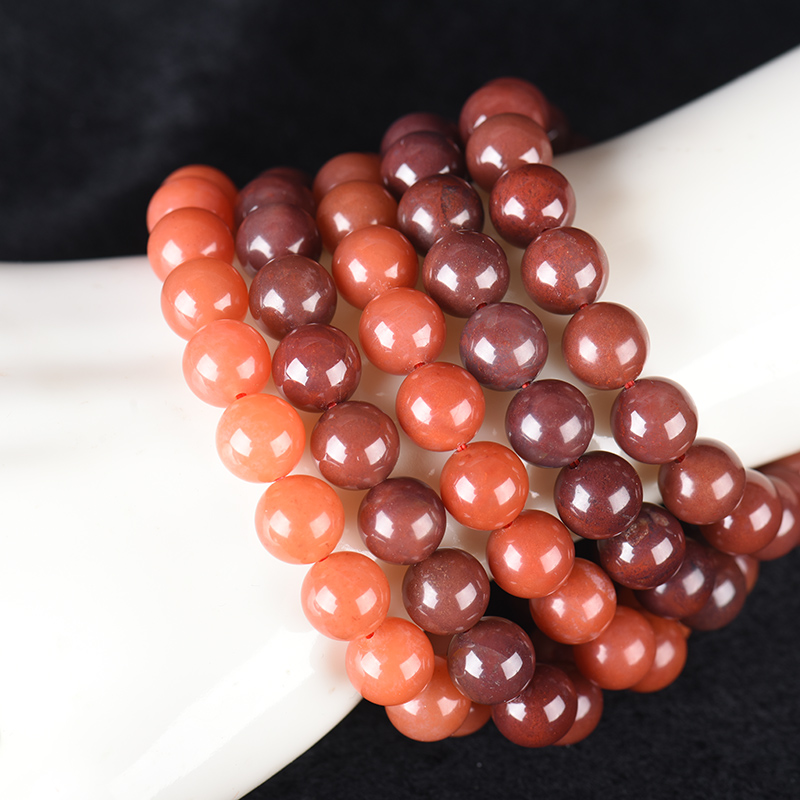
- Color: Pure, saturated palace red (closest to traditional Chinese palace red)
- Uniformity: Even color distribution
- Transparency: Opaque to semi-translucent
- Pattern: Minimal to none (full color preferred)
- Quality: Highest selection from raw ore
What Makes P1 Special:
- Represents the finest color quality in Forever Star’s inventory
- Only 5-10% of mined ore meets P1 standards
- Most sought-after for fine jewelry and investment pieces
- Stable, rich red color that doesn’t fade
Ideal For:
- High-end jewelry (rings, pendants, earrings)
- Collector beads and cabochons
- Investment-grade pieces
- Traditional Chinese jewelry designs
Value Position: Premium pricing — the benchmark for quality
P4: Flame Pattern Series (火焰纹系列)
Characteristics:
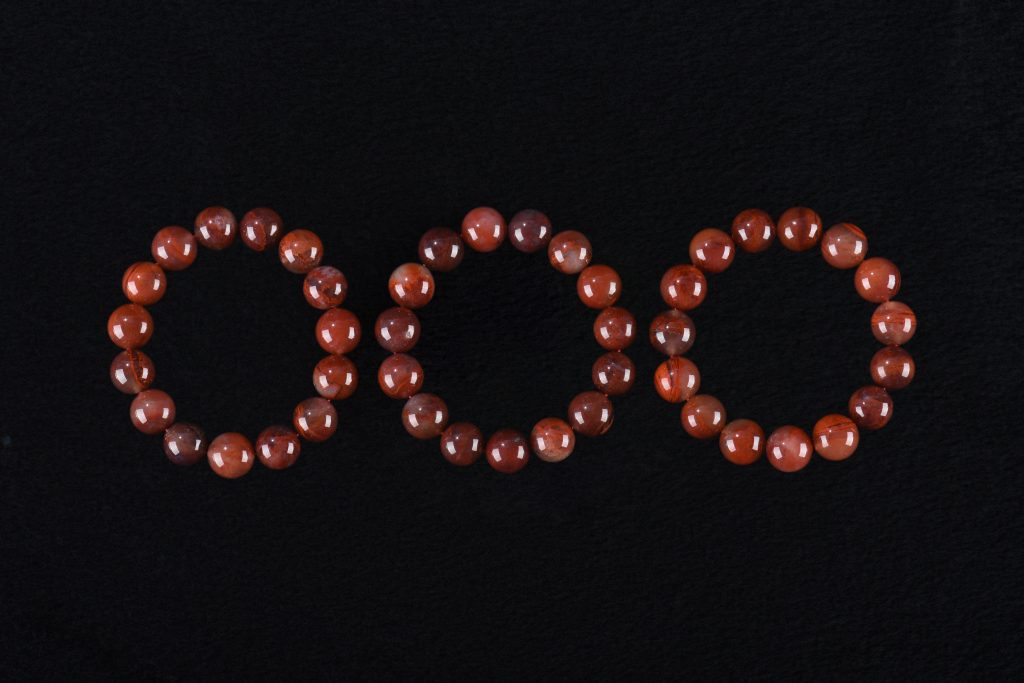
- Pattern: Distinctive red-white interplay resembling dancing flames
- Base Color: White to translucent foundation
- Red Distribution: Swirling, flame-like red formations
- Uniqueness: Each piece displays completely unique pattern
- Quality Grading: AAA, AA, A based on flame definition and coverage
What Makes P4 Special:
- The most iconic nanhong pattern — instantly recognizable
- Flame patterns formed over 200-400 million years
- No two pieces are identical — nature’s fingerprint
- High collector demand, especially for AAA grade flames
Flame Pattern Sub-Types:
- Full Flame (满火焰) — Pattern covers entire piece (most valuable)
- Scattered Flame (散火焰) — Flame clusters with plain areas
- Ribbon Flame (带状火焰) — Flames arranged in flowing bands
- Explosion Flame (爆裂火焰) — Flames radiate from center points
Ideal For:
- Statement jewelry pieces
- Collector cabochons
- Artistic jewelry designs
- Investment in pattern-grade materials
Value Position: Pattern quality drives pricing (AAA flame = 15-50x base value)
P5: Artistic/Scenic Series (意境款系列)
Characteristics:
- Pattern: Diverse special effects and artistic formations
- Varieties: Landscape patterns, cloud formations, water waves, silk patterns
- Uniqueness: One-of-a-kind pieces with recognizable scenes
- Rarity: Less than 0.1% of production
- Collectibility: Museum-quality specimens
What Makes P5 Special:
- Nature’s accidental art — geological processes create recognizable scenes
- Extremely rare — fewer than 1 in 1,000 pieces qualify
- Each piece tells a unique visual story
- Highest appreciation potential (20-50% annually for exceptional pieces)
P5 Pattern Varieties:
- Landscape Pattern (景观纹)
- Natural scenes resembling mountains, clouds, water
- Most collectible P5 variety
- Auction record: $180,000 for 45-carat landscape slice (2019)
- Cloud Pattern (云纹)
- Soft, cloud-like red formations
- Resembles traditional Chinese cloud motifs
- Elegant, flowing appearance
- Water Wave Pattern (水波纹)
- Flowing, wave-like formations
- Often found in ice floating materials
- Rhythmic, calming visual effect
- Silk Pattern (缟纹)
- Fine, thread-like lines
- Delicate, elegant appearance
- Popular for jewelry
- Special Effects (特殊效果)
- Unique mineral formations
- Unexpected color combinations
- One-of-a-kind specimens
Ideal For:
- Serious collectors
- Museum exhibitions
- Investment-grade specimens
- Featured jewelry centerpieces
Value Position: Exceptional pieces command premium pricing; landscape patterns can reach 50-100x base value
样品卡-1024x744.jpg)
样品卡-1024x744.jpg)
Comparison: P1 vs P4 vs P5
| Feature | P1 (Palace Red) | P4 (Flame Pattern) | P5 (Artistic/Scenic) |
|---|---|---|---|
| Primary Value | Color quality | Pattern definition | Artistic uniqueness |
| Pattern | Minimal/none | Flame formations | Landscape/special effects |
| Color | Pure, uniform red | Red-white interplay | Variable |
| Rarity | 5-10% of ore | 3-5% of gem-grade | <0.1% of production |
| Best Use | Fine jewelry | Statement pieces | Collector specimens |
| Value Multiplier | 5-15x (color-based) | 8-50x (pattern-based) | 20-100x (artistry-based) |
| Target Buyer | Jewelry wearers | Pattern collectors | Art collectors |
Value Drivers Across All Grades:
- Naturalness — 100% untreated material (Forever Star standard)
- Craftsmanship — Quality cutting and polishing
- Certification — NGTC confirmation of natural status
- Origin — Kazakhstan primary ore (premium source)
- Condition — No cracks, chips, or dark inclusions
P1-P4标准卡-1024x753.jpg)
P5-PT标准卡-1024x753.jpg)
1.3 Rose Red Series (玫瑰红系)
Overview:
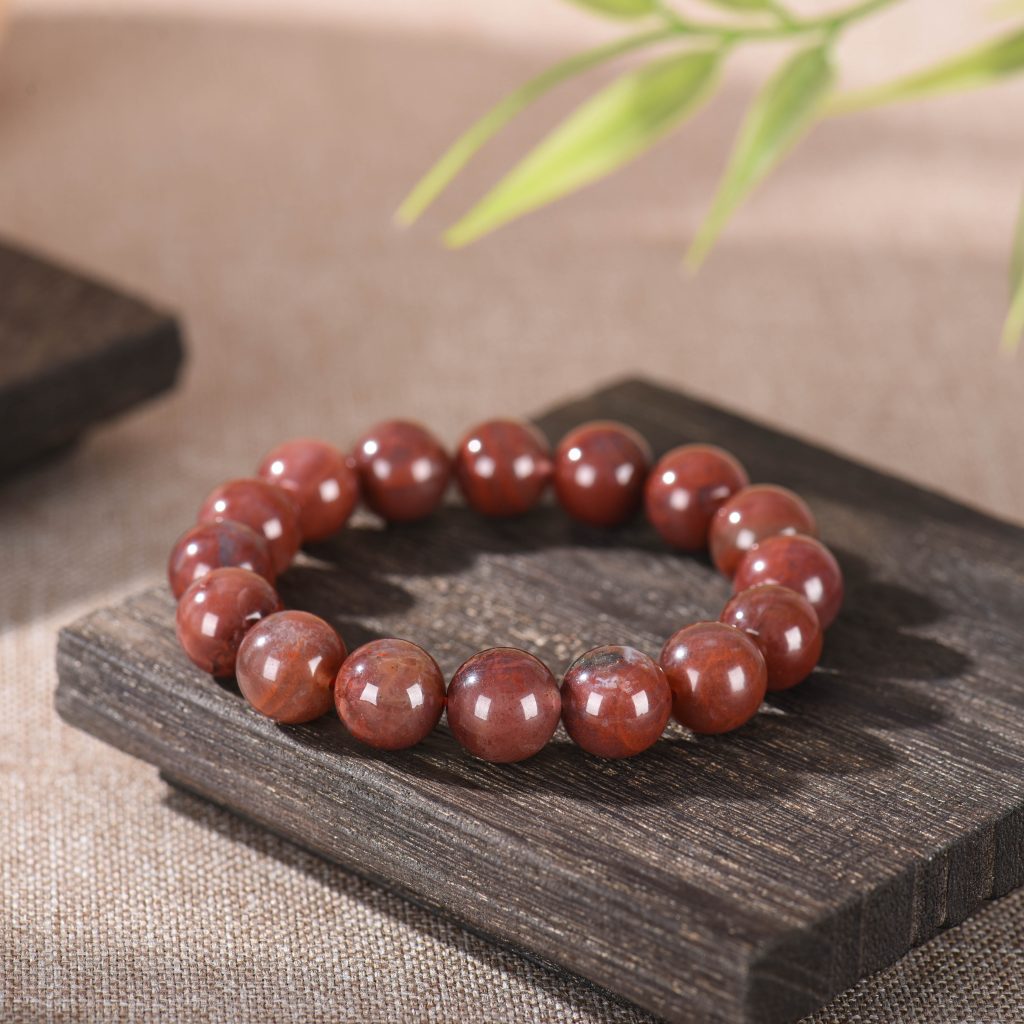
Rose Red nanhong displays pinkish-red tones with purple undertones, offering a softer, more romantic alternative to palace red.
Color Characteristics:
- Base tone: Pink-red to purplish-red
- Undertones: Cool, purple hints
- Saturation: Medium
- Transparency: Semi-translucent to translucent
Grade Range: R1 through R6
| Grade | Color Description | Characteristics |
|---|---|---|
| R1 | Light rose pink | Soft, delicate |
| R2 | Rose red, light | Feminine, gentle |
| R3 | Standard rose red | Balanced pink-red |
| R4 | Deep rose red | Rich, saturated |
| R5 | Wine red | Purple undertones prominent |
| R6 | Deep wine red | Darkest rose series |
Market Appeal:
- Popular among: Female collectors, contemporary jewelry designers
- Price range: Mid to premium (R3-R5 most sought-after)
- Best settings: White gold, platinum, silver
Value Considerations:
- R3-R4 offer best value (balanced color, accessible pricing)
- R5-R6 command premium for rarity
- Consistency of purple undertone affects grading
1.4 Cherry Red Series (樱桃红系)
Overview:
Cherry Red nanhong features bright orange-red tones reminiscent of ripe cherries. This series is prized for its vibrancy and translucency.
Color Characteristics:
- Base tone: Bright orange-red
- Undertones: Warm, yellow-orange
- Saturation: High
- Transparency: Translucent to semi-translucent
Grade Range: C1 through C5
| Grade | Color Description | Best Use |
|---|---|---|
| C1 | Light cherry, pale orange-red | Delicate jewelry |
| C2 | Cherry red, bright | Beaded strands |
| C3 | Saturated cherry red | Statement pieces |
| C4 | Deep cherry, reddish-orange | Fine jewelry |
| C5 | Intense cherry, nearly persimmon | Collector pieces |
Market Position:
- Appeal: Youthful, vibrant, energetic
- Price range: Accessible to mid-range
- Popular in: Modern jewelry designs, everyday wear
Special Note: Cherry red nanhong’s translucency makes it ideal for:
- Cabochons (showcases depth)
- Carved pieces (light penetration enhances beauty)
- Inlay work (color pops against metal)
1.5 Specialty Color Varieties
Beyond the three primary series, nanhong agate includes several specialty color varieties that command collector interest.
Ice Floating (冰飘)
Characteristics:
- Base: Clear to white translucent material
- Pattern: Red floating within clear base
- Appearance: Ethereal, watercolor-like
Quality Factors:
- Clarity of base material (clearer = better)
- Red pattern definition (sharper = better)
- Pattern artistry (landscape, floral = premium)
Price Range: Mid to high (depends on pattern quality)
Lychee Jelly (荔枝冻)
Characteristics:
- Base: Milky white to pale gray translucent
- Texture: Jelly-like, soft appearance
- Red coloration: Often minimal or absent
Quality Factors:
- Translucency (higher = better)
- Texture smoothness
- Cleanliness (no dark inclusions)
Market Appeal: Growing popularity in contemporary jewelry
Black-Red Materials (黑红料)
Characteristics:
- Base: Black or very dark gray
- Red coloration: Red portions contrast sharply
- Use: Preferred for cameo carving, artistic pieces
Quality Factors:
- Contrast between black and red
- Carving suitability
- Pattern interest
Specialty Use: Artistic carving, featured collector pieces
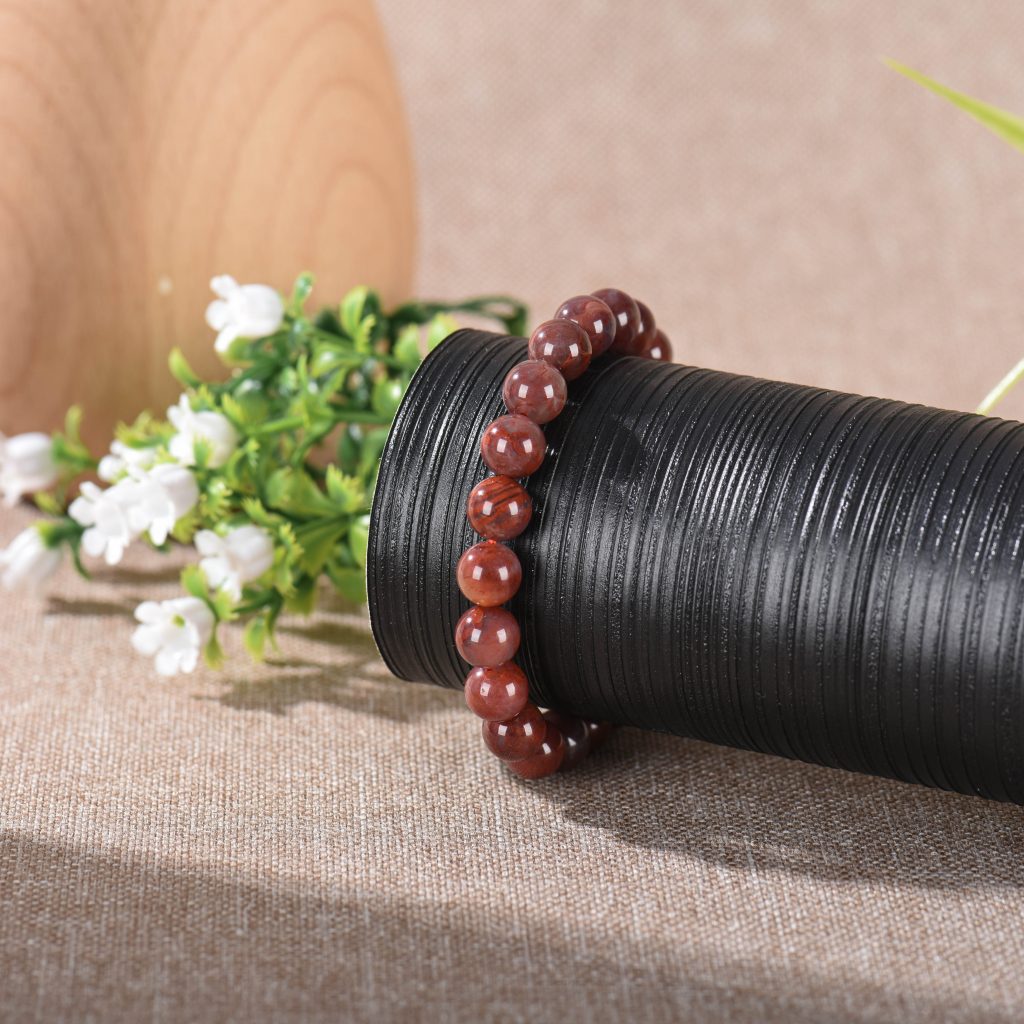
Section 2: Nanhong Agate Pattern Classification
2.1 Why Patterns Matter
While color determines the base value of nanhong agate, patterns can multiply that value exponentially.
The Pattern Premium:
A piece with exceptional pattern can command 10-50x the price of similar-quality material without distinctive patterning.
Example:
- Plain palace red cabochon (5 carats): $500
- Flame pattern palace red cabochon (5 carats): $5,000-25,000
What Creates Patterns:
Nanhong agate patterns form over 200-400 million years through geological processes:
- Silica-rich solutions deposit in volcanic rock cavities
- Iron oxide minerals distribute unevenly during formation
- Layer-by-layer deposition creates banding and swirling
- Geological pressure and heat create unique mineral arrangements
The result: Each pattern is completely unique — nature’s fingerprint that cannot be replicated.
2.2 Flame Pattern (火焰纹) — The King of Nanhong Patterns
Overview:
Flame pattern is the most iconic and valuable nanhong agate pattern. It features red and white minerals intermingling in swirling, flame-like formations.
Formation Process:
Flame patterns form when:
- Red hematite-rich layers interleave with white chalcedony layers
- Geological movement creates swirling, flowing patterns
- Rapid deposition prevents uniform color distribution
- Result: Dynamic “flames” that appear to dance within the stone
Pattern Quality Grades:
| Grade | Pattern Characteristics | Value Multiplier |
|---|---|---|
| AAA Grade | Crisp, defined flames; high contrast; full pattern coverage | 15-50x |
| AA Grade | Clear flames; good contrast; 70-90% coverage | 8-15x |
| A Grade | Visible flames; moderate contrast; 50-70% coverage | 3-8x |
| Commercial | Weak flame definition; low contrast; <50% coverage | 1-3x |
AAA Grade Flame Pattern Characteristics:
- Crisp Definition — Flame edges are sharp and well-defined
- High Contrast — Strong red-white color differentiation
- Full Coverage — Flame pattern covers entire visible surface
- Dynamic Movement — Patterns appear to flow and dance
- Three-Dimensional Depth — Pattern extends through stone depth
- No Muddy Areas — Clean transitions, no gray or brown muddiness
AA Grade Characteristics:
- Clear flame patterns with good definition
- Strong color contrast
- Pattern covers most of the piece
- Minor areas of weaker pattern
A Grade Characteristics:
- Flame pattern visible but less defined
- Moderate color contrast
- Pattern coverage 50-70%
- Some muddy or plain areas
Flame Pattern Sub-Varieties:
1. Full Flame (满火焰)
- Flame pattern covers entire piece
- No plain areas
- Most valuable flame variety
2. Scattered Flame (散火焰)
- Flame clusters distributed across piece
- Some plain areas between flame clusters
- Good value, more accessible
3. Ribbon Flame (带状火焰)
- Flames arranged in band-like formations
- Creates flowing, directional movement
- Desirable for beads and cabochons
4. Explosion Flame (爆裂火焰)
- Flames radiate outward from center points
- Dramatic, eye-catching pattern
- Rare and highly collectible
2.3 Red-White Interspersed Pattern (红白缠丝)
Overview:
Red-white interspersed patterns feature alternating layers or clouds of red and white material, creating banded or marbled effects.
Pattern Types:
1. Banded Pattern (带状缠丝)
- Parallel or concentric bands of red and white
- Created by layered deposition
- Value depends on band regularity and contrast
Quality Factors:
- Band definition (sharper boundaries = better)
- Color contrast (red-white clarity)
- Band thickness consistency
- Overall symmetry
2. Cloud Pattern (云纹缠丝)
- Soft, cloud-like red formations in white base
- Organic, flowing appearance
- Resembles traditional Chinese cloud motifs
Quality Factors:
- Cloud definition
- Red color saturation
- White base cleanliness
- Artistic composition
3. Mottled Pattern (点状缠丝)
- Red spots or dots distributed in white base
- Playful, speckled appearance
- Less formal than banded or cloud patterns
Quality Factors:
- Spot size consistency
- Distribution evenness
- Color contrast
- Base material clarity
2.4 Landscape Patterns (景观纹) — Nature’s Masterpieces
Overview:
Landscape patterns are naturally occurring scenes within the agate that resemble:
- Mountains and valleys
- Clouds and mist
- Water and waves
- Trees and forests
- Human or animal figures
Why They’re Special:
Landscape patterns are accidental art — geological processes creating recognizable scenes without human intervention. These pieces are:
- Extremely rare (less than 0.1% of production)
- One-of-a-kind (no two are alike)
- Highly collectible (museum-quality pieces)
Famous Example:
In 2019, a nanhong agate slice displaying a natural “mountain landscape at sunset” pattern sold for $180,000 at auction — weighing only 45 carats.
Evaluating Landscape Patterns:
- Clarity — How clearly defined is the scene?
- Recognizability — Can viewers identify the subject?
- Composition — Is the scene artistically balanced?
- Completeness — Does the scene fill the viewing area?
- Color Harmony — Do colors enhance the scene?
Investment Potential:
High-quality landscape pattern pieces:
- Appreciate 20-50% annually (documented cases)
- Attract serious collectors
- Often become museum exhibits
- Generate media attention
2.5 Other Notable Patterns
Water Wave Pattern (水波纹)
Characteristics:
- Flowing, wave-like formations
- Soft, rhythmic movement
- Often found in ice floating materials
Value: Mid to high (depends on wave definition)
Silk Pattern (缟纹)
Characteristics:
- Fine, thread-like lines
- Delicate, elegant appearance
- Can be straight or curved
Value: Mid-range (popular for jewelry)
Plain/Full Color (满色肉)
Characteristics:
- No distinct pattern
- Uniform color throughout
- Value depends entirely on color grade
Value: Base to high (P6-PT palace red without pattern still commands premium)
Section 3: Color + Pattern Combination Value Assessment
3.1 The Value Matrix
The most valuable nanhong agate combines high-grade color with exceptional pattern.
Value Matrix (Forever Star System):
| Grade + Pattern | AAA Pattern | AA Pattern | A Pattern | Plain |
|---|---|---|---|---|
| P1 (Top Palace Red) | 20-50x | 10-25x | 5-12x | 5-8x |
| P4 (Flame Pattern) | 15-50x | 8-15x | 3-8x | N/A |
| P5 (Artistic/Scenic) | 50-100x+ | 20-50x | 10-20x | N/A |
| Rose/Cherry | 8-20x | 4-10x | 2-5x | 1-3x |
Base Price: Commercial grade plain material (reference point = 1x)
Note: P5 artistic/scenic pieces with exceptional landscape patterns can exceed 100x base value for museum-quality specimens.
Key Insights:
- Color is the foundation — Higher color grades multiply all pattern values
- Pattern is the multiplier — Exceptional patterns exponentially increase value
- Combination is king — P7-P9 + AAA Flame = ultimate collector grade
- Plain high-color still valuable — P7-P9 without pattern still commands 8-15x base
3.2 Real-World Examples
Example 1: 8mm Bead Strand (36 beads)
| Specification | Estimated Value |
|---|---|
| P2 Palace Red, Plain | $540-900 |
| P2 Palace Red, AA Flame | $4,320-7,200 |
| P5 Palace Red, Plain | $2,160-3,600 |
| P5 Palace Red, AA Flame | $17,280-28,800 |
| P7 Palace Red, AAA Flame | $72,000-150,000+ |
Example 2: 10 Carat Cabochon
| Specification | Estimated Value |
|---|---|
| Cherry Red C3, Plain | $200-400 |
| Cherry Red C3, AA Flame | $1,600-3,200 |
| Palace Red P4, Plain | $800-1,500 |
| Palace Red P4, AAA Flame | $12,000-25,000 |
| Palace Red P8, AAA Flame | $80,000-200,000+ |
3.3 Collector Priorities
What Serious Collectors Look For:
- Color Saturation — Deep, rich colors (P5 and above)
- Pattern Definition — Crisp, clear patterns (AA and above)
- Pattern Coverage — Full or near-full pattern coverage
- Material Cleanliness — No cracks, chips, or dark inclusions
- Craftsmanship — Quality cutting and polishing
- Certification — NGTC/GIA confirmation of natural, untreated status
- Provenance — Documented origin (Kazakhstan primary ore preferred)
Investment-Grade Checklist:
✅ Color grade P4 or higher
✅ Pattern grade AA or higher
✅ No visible flaws or inclusions
✅ Professional cutting/polishing
✅ NGTC or GIA certification
✅ Kazakhstan origin confirmed
✅ Purchase from reputable dealer
Section 4: How to Evaluate Color and Pattern Quality
4.1 Color Evaluation Protocol
Step 1: Lighting Conditions
- Use natural daylight or daylight-equivalent LED (5500-6500K)
- Avoid warm incandescent lighting (distorts color perception)
- Consistent lighting for all comparisons
Step 2: Background Setup
- Place specimen on pure white background
- Neutral environment (no colored surfaces nearby)
- Consistent background for all evaluations
Step 3: Viewing Distance
- Hold specimen 15-20 cm from eyes
- View from multiple angles
- Check for color consistency across surface
Step 4: Color Assessment Criteria
| Factor | What to Look For |
|---|---|
| Hue | Which color series? (Palace, Rose, Cherry) |
| Saturation | How intense is the color? (pale to deep) |
| Tone | How light or dark? (L1-L9 scale) |
| Uniformity | Even distribution or mottled? |
| Undertones | Warm (orange) or cool (purple)? |
Step 5: Grade Assignment
Compare against reference color cards or known grade samples. Assign grade based on closest match.
4.2 Pattern Evaluation Protocol
Step 1: Magnification
- Use 10x loupe for initial examination
- 30x microscope for detailed analysis
- Document pattern characteristics
Step 2: Pattern Type Identification
- Flame pattern? (red-white interplay)
- Banded pattern? (parallel layers)
- Cloud pattern? (organic formations)
- Landscape pattern? (recognizable scenes)
- Plain? (no distinct pattern)
Step 3: Pattern Quality Assessment
| Criterion | AAA Grade | AA Grade | A Grade |
|---|---|---|---|
| Definition | Crisp, sharp edges | Clear definition | Moderate definition |
| Contrast | High (strong red-white) | Good contrast | Moderate contrast |
| Coverage | 90-100% | 70-90% | 50-70% |
| Depth | 3D throughout | Good depth | Some depth |
| Artistry | Exceptional | Very good | Good |
Step 4: Flaw Inspection
Check for:
- Cracks or fractures (reduces value)
- Dark inclusions (unless part of pattern)
- Surface imperfections
- Uneven polishing
Step 5: Grade Assignment
Assign pattern grade based on combined assessment of all criteria.
4.3 Common Evaluation Mistakes
Mistake 1: Poor Lighting
- Evaluating under warm or dim lighting
- Result: Color appears different than actual
- Solution: Always use daylight-equivalent lighting
Mistake 2: Ignoring Pattern Depth
- Only examining surface pattern
- Result: Miss shallow or surface-only patterns
- Solution: View from multiple angles, check 3D depth
Mistake 3: Overlooking Flaws
- Focusing only on color/pattern
- Result: Miss cracks or inclusions that reduce value
- Solution: Systematic flaw inspection with magnification
Mistake 4: No Reference Standards
- Evaluating without comparison samples
- Result: Inconsistent grading
- Solution: Use physical color cards and pattern references
Mistake 5: Rushing the Process
- Quick glance assessment
- Result: Miss important details
- Solution: Allow 5-10 minutes per piece for thorough evaluation
Section 5: Market Trends and Investment Outlook
5.1 Current Market Dynamics (2026)
Supply Side:
- Kazakhstan Production: Stable but limited (no new major deposits)
- Chinese Mining Restrictions: Continue to limit domestic supply
- Gem-Grade Percentage: Only 15-20% of ore meets gem standards
- AAA Grade Availability: Less than 1% of total production
Demand Side:
- Collector Demand: Growing (especially for AAA flame pattern)
- Jewelry Design: Increasing use in contemporary pieces
- Investment Interest: Rising awareness of nanhong as alternative asset
- International Market: Expanding beyond traditional Asian markets
Price Trends (2020-2026):
| Grade | 2020 Price Index | 2026 Price Index | Appreciation |
|---|---|---|---|
| AAA Flame Pattern | 100 | 450-600 | +350-500% |
| AA Flame Pattern | 100 | 280-350 | +180-250% |
| A Flame Pattern | 100 | 150-200 | +50-100% |
| Plain High-Color | 100 | 180-250 | +80-150% |
| Commercial Grade | 100 | 110-130 | +10-30% |
Key Observation: Premium grades have significantly outperformed commercial grades.
5.2 Investment Recommendations
For Conservative Investors:
- Focus on: AA-AAA grade palace red with flame pattern
- Price range: $5,000-50,000 per piece
- Expected appreciation: 15-25% annually
- Risk level: Moderate
For Aggressive Investors:
- Focus on: AAA grade P7-P9 with exceptional flame or landscape patterns
- Price range: $50,000-500,000+ per piece
- Expected appreciation: 25-50% annually
- Risk level: Higher (but historically strong returns)
For Jewelry Designers:
- Focus on: A-AA grade materials in various colors
- Price range: $500-10,000 depending on project
- Value-add: Design craftsmanship multiplies material value
- Risk level: Moderate (dependent on design market)
For New Collectors:
- Start with: A grade palace red or cherry red
- Price range: $200-2,000 per piece
- Learning opportunity: Develop eye for quality
- Risk level: Lower (accessible entry point)
5.3 Future Outlook (2026-2030)
Bullish Factors:
- Finite Supply — No new major deposits discovered
- Mining Restrictions — Environmental regulations limit extraction
- Growing Demand — International market expansion
- Collector Recognition — Auction results validate investment thesis
- Cultural Renaissance — Renewed interest in traditional Chinese gems
Bearish Risks:
- Economic Downturns — Luxury goods demand may soften
- Treatment Technology — Improved treatments could confuse market (but also increases value of certified natural)
- Market Speculation — Short-term bubbles possible in hot segments
Overall Outlook: Bullish for high-quality natural nanhong agate
Projected Appreciation (2026-2030):
- AAA Grade: 15-30% annually
- AA Grade: 10-20% annually
- A Grade: 5-15% annually
- Commercial: 0-5% annually
Section 6: The Forever Star Standard
6.1 Color Card Development
Forever Star Jewelry’s color classification system is based on physical color cards developed from actual Kazakhstan primary ore samples.
Development Process:
- Raw Material Selection — Hand-picked from 100 tons of ore inventory
- Grading Protocol — Each piece evaluated by gemologists
- Reference Sample Creation — Physical cards for each grade
- Continuous Calibration — Regular updates based on new materials
Why Physical Cards Matter:
- Consistency — Eliminates subjective color perception
- Traceability — Each grade tied to actual ore samples
- Training — Used for staff and customer education
- Quality Control — Reference for all grading decisions
6.2 Quality Commitment
100% Natural Guarantee:
✅ No dyeing
✅ No heat treatment
✅ No resin injection
✅ No acid washing
✅ Physical processing only (cutting, grinding, polishing)
Certification:
- NGTC certificates included with all pieces over $50
- Online verification available
- Full traceability from mine to market
Inventory (April 2026):
- 100 tons raw ore reserve
- Nearly 100,000 finished pieces
- 47 AAA grade flame pattern pieces
- All grades P1-P9 available
6.3 Product Range
Available Forms:
- Raw ore specimens — For collectors and lapidaries
- Beads — 4mm to 20mm, all color grades
- Cabochons — Various shapes and sizes
- Carved pieces — Traditional and contemporary designs
- Custom materials — Sourced to specification
All products maintain the same natural, untreated standard with full certification.
FAQ
Q1: What’s the most valuable nanhong agate?
A: P5 Artistic/Scenic series with exceptional landscape patterns (50-100x+ base value), followed by P1 Top Grade Palace Red with AAA flame pattern (20-50x base value).
Q2: How do I know if the color is natural?
A: Request NGTC or GIA certification. Natural nanhong shows color variation under magnification. Uniform, saturated color often indicates dyeing.
Q3: Is flame pattern the only valuable pattern?
A: Flame pattern is the most coveted, but landscape patterns and high-quality cloud/banded patterns also command significant premiums.
Q4: Can pattern quality change over time?
A: No. Patterns are permanent geological formations. However, treated materials may show pattern degradation (fading, cracking) over time.
Q5: What’s the best grade for investment?
A: P5 landscape patterns (highest appreciation) and P4 AAA flame patterns (strong, stable growth) offer the best investment potential. P1 top grade palace red is ideal for jewelry and steady value retention.
Q6: How do I compare color grades online?
A: Request high-resolution photos under natural daylight. Ask for video showing the piece from multiple angles. Reputable dealers provide detailed grade specifications.
Q7: Does certification guarantee the color grade?
A: NGTC/GIA certification confirms natural, untreated status. Color grading is dealer-specific. Forever Star provides both certification and grade specification.
Q8: Is P1 grade worth buying?
A: Absolutely. P1 Top Grade Palace Red represents the finest color quality with pure, saturated red. It’s ideal for high-end jewelry, daily wear, and steady value retention. P1 pieces with flame patterns offer excellent investment potential.
Q9: What’s the difference between Kazakhstan and Chinese nanhong?
A: Kazakhstan nanhong typically displays deeper, more saturated colors and higher gem-grade ratios. Chinese nanhong (from Sichuan/Yunnan) is increasingly rare due to mining restrictions.
Q10: How should I store my nanhong agate collection?
A: Store in soft cloth pouches or jewelry boxes, separated from harder gemstones. Avoid extreme temperatures and direct sunlight. Clean with mild soap and warm water.
Conclusion: Mastering Color and Pattern Assessment
Understanding nanhong agate color and pattern grading is fundamental to:
- Making informed purchases — Know what you’re buying and why
- Protecting your investment — Avoid overpaying for inferior materials
- Building a quality collection — Focus on pieces with lasting value
- Navigating the market — Speak confidently with dealers and collectors
Key Takeaways:
- Forever Star’s Three-Tier System — P1 (Top Palace Red), P4 (Flame Pattern), P5 (Artistic/Scenic)
- P1 = Finest Color — Pure, saturated palace red for jewelry and investment
- P4 = Iconic Patterns — Unique flame formations, 8-50x value multiplier
- P5 = Nature’s Art — Rare landscape/scenic patterns, 50-100x+ potential
- Certification is essential — Always request NGTC/GIA for pieces over $500
- Kazakhstan primary ore — The premier source for natural, untreated nanhong
For Buyers:
Whether you’re purchasing for personal enjoyment, jewelry design, or investment, understanding the P1/P4/P5 system empowers you to:
- Evaluate pieces confidently
- Negotiate from knowledge
- Build a collection with lasting value
- Avoid common pitfalls and overpayments
The Forever Star Commitment:
Forever Star Jewelry provides:
- ✅ 100% natural Kazakhstan primary ore nanhong agate
- ✅ Three-tier grading: P1 (Top Palace Red), P4 (Flame Pattern), P5 (Artistic/Scenic)
- ✅ Pattern assessment (AAA/AA/A/Commercial)
- ✅ NGTC certification with every piece
- ✅ Physical color card reference system
- ✅ 100 tons raw ore inventory
- ✅ Nearly 100,000 finished pieces in stock
- ✅ Competitive wholesale pricing
Final Thought:
Nanhong agate is more than a gemstone — it’s a piece of geological history, formed over hundreds of millions of years. Each color variation and pattern tells a story of Earth’s creative processes. By understanding and appreciating these natural characteristics, you join a tradition of collectors and admirers that spans over 2,000 years.
Choose natural. Choose certified. Choose quality.
References & Further Reading
Color and Grading Standards:
- Forever Star Jewelry Color Card System — Based on Kazakhstan primary ore samples (2026)
- NGTC Gemstone Grading Standards — China national standard for colored stones
- GIA Gem Encyclopedia — Chalcedony and Agate entries: https://www.gia.edu/gem-encyclopedia
Market Research:
- NGTC 2025 Annual Report — Nanhong agate testing statistics
- Hong Kong Jewelry Auction Results (2020-2026) — Price realization data
- China Jewelry Industry Association — Market trend reports
Geological Background:
- Zhou Dan-yi et al., 2016 — Rock and Mineral Analysis (nanhong formation)
- GIA Spring 2021 — Treated agate research and identification
Verification Resources:
- NGTC Certificate Lookup: https://www.ngtc.com.cn/
- Forever Star Jewelry Inventory: Contact for current availability