The complete guide to flame pattern nanhong agate — the rarest and most coveted variety. Learn why collectors pay premium prices, how to grade flame patterns, and where to find authentic pieces in 2026.
Editor’s Note (March 2026): This guide covers flame pattern nanhong agate, one of the most sought-after varieties in the gemstone market. Information is based on geological research, market analysis, and direct observation from Kazakhstan mining operations. Last updated: March 30, 2026. For investment-grade pieces, always request NGTC certification.
Introduction: The $52,000 Flame Pattern
In March 2025, a single flame pattern nanhong cabochon sold for $52,000 at a Hong Kong auction.
The stone weighed just 12.3 carats.
That’s $4,227 per carat — more than most diamonds, competing with fine colored gemstones like ruby and sapphire.
What made this particular piece so valuable?
Three factors:
- AAA-grade flame pattern — exceptional three-dimensional pattern that appeared to “move” when rotated
- Natural, untreated — NGTC certification confirmed no dyeing, no heat treatment, no resin
- Kazakhstan origin — the world’s primary source for premium flame pattern nanhong
But here’s the reality check: 99% of buyers never see AAA-grade flame patterns in person.
According to Kazakhstan mining data:
- Only 15-20% of mined nanhong ore meets gem-grade standards
- Of gem-grade material, only 3-5% displays true flame patterns
- Of flame pattern material, less than 1% achieves AAA grade
Translation: For every 1,000 kilograms of nanhong ore extracted, less than 100 grams becomes AAA-grade flame pattern gemstone.
This guide reveals everything you need to know about flame pattern nanhong agate — from geological formation to professional grading, market values, and where to find authentic pieces in 2026.
What Is Flame Pattern Nanhong Agate?
The Definitive Description
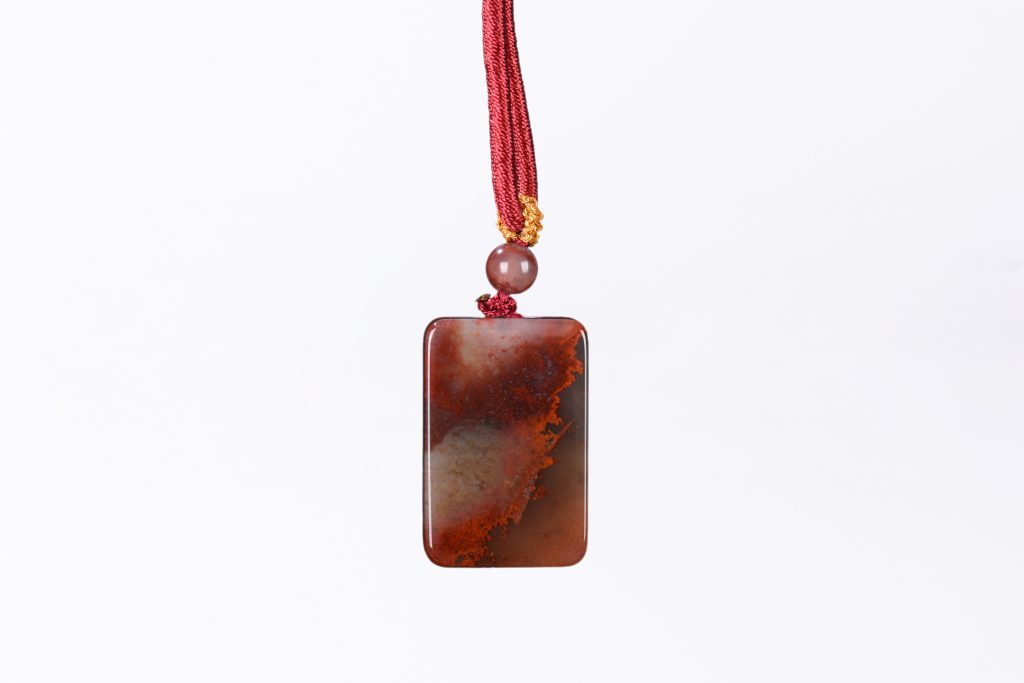
Flame pattern nanhong agate is a rare variety of natural nanhong agate characterized by distinctive red-and-white intermingling patterns that resemble dancing flames or flowing lava.
The Chinese name 火焰纹 (huǒ yàn wén) literally translates to “flame texture” or “flame pattern,” capturing the visual essence of this extraordinary stone.
Key Characteristics
Visual Appearance:
- Red portions range from deep crimson to bright orange-red
- White or translucent base material creates contrast
- Patterns appear to “move” or “flow” when viewed from different angles
- Each piece is completely unique — no two flame patterns are identical
Geological Composition:
- Base material: Cryptocrystalline quartz (SiO₂)
- Red coloration: Microscopic iron oxide (hematite) inclusions
- Density: 2.6-2.7 g/cm³
- Hardness: 6.5-7 on Mohs scale
- Formation time: 200-400 million years (Late Permian to Triassic period)
Where Flame Pattern Nanhong Forms
Primary Source: Kazakhstan
The vast majority of genuine flame pattern nanhong comes from Kazakhstan’s primary ore deposits, discovered in the 1990s and actively mined since the 2010s.
Why Kazakhstan?
Kazakhstan’s geological conditions were uniquely suited for flame pattern formation:
- Volcanic activity created cavities in ancient rock formations
- Silica-rich hydrothermal solutions filled these cavities over millions of years
- Iron oxide minerals were introduced during specific geological events
- Temperature and pressure fluctuations caused the iron oxide to distribute in swirling patterns
Historical Context:
While Chinese nanhong (from Sichuan and Yunnan provinces) has been prized for over 2,000 years, flame pattern varieties were extremely rare in Chinese deposits. The Kazakhstan discovery opened access to this coveted variety for the first time in history.
Market Insight: Forever Star Jewelry maintains direct relationships with Kazakhstan mining operations, providing access to primary ore materials before they reach the open market. This direct sourcing is one reason why Forever Star has one of the largest flame pattern inventories globally.
The Science: How Flame Patterns Form
Step-by-Step Formation Process
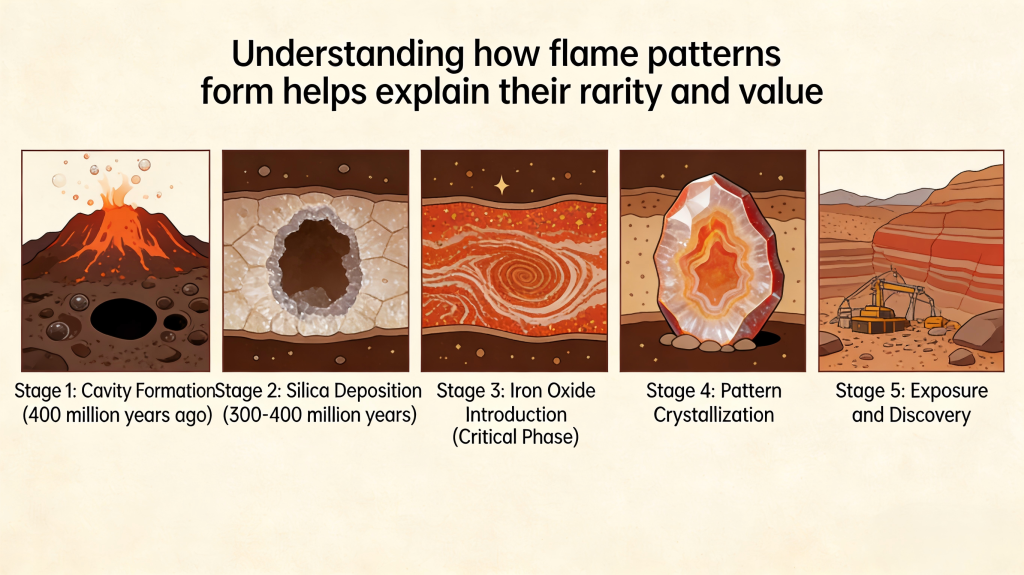
Understanding how flame patterns form helps explain their rarity and value.
Stage 1: Cavity Formation (400 million years ago)
Volcanic activity creates gas bubbles and cavities in solidifying lava flows. These empty spaces become the “molds” for future agate formation.
Stage 2: Silica Deposition (300-400 million years)
Groundwater rich in dissolved silica (SiO₂) slowly seeps into the cavities. Over millions of years, layer upon layer of microcrystalline quartz deposits on the cavity walls.
Stage 3: Iron Oxide Introduction (Critical Phase)
During a specific geological window, iron-rich minerals enter the system. This is where flame patterns begin to form:
- Iron oxide particles (primarily hematite, Fe₂O₃) mix with the silica solution
- Temperature fluctuations cause the iron oxide to concentrate in certain areas
- Pressure changes create swirling, turbulent flow patterns
- Rapid cooling “freezes” these patterns in place
Stage 4: Pattern Crystallization
As the solution continues to cool and solidify:
- Red iron oxide concentrates in flame-like formations
- White or translucent quartz forms the background
- The boundary between red and white shows gradual, organic transitions
- Three-dimensional depth develops throughout the stone
Stage 5: Exposure and Discovery
Millions of years later, geological uplift and erosion expose the agate-bearing rock formations. Modern mining operations extract the material for gemstone use.
Why Flame Patterns Are So Rare
Statistical Reality:
According to mining data from Kazakhstan operations:
| Grade | Percentage of Total Production |
|---|---|
| Gem-grade (any quality) | 15-20% |
| Flame pattern (any grade) | 3-5% of gem-grade |
| AAA grade flame pattern | 0.5-1% of flame pattern |
Translation: For every 1,000 kilograms of nanhong ore extracted:
- 150-200 kg meets gem-grade standards
- 4.5-10 kg displays flame patterns
- Less than 100 grams achieves AAA grade
This extreme scarcity is the fundamental driver of flame pattern nanhong’s premium valuation.
Authentication Tip: When evaluating flame pattern pieces, always request NGTC or GIA certification. According to NGTC’s 2025 annual report, over 80% of nanhong submitted for testing showed indications of treatment. Forever Star includes NGTC certification with all flame pattern pieces above $500 at no additional cost.
Grading Flame Pattern Nanhong: A/AA/AAA Standards
Professional Grading Criteria
The gemstone industry uses a three-tier grading system for flame pattern nanhong:
| Grade | Pattern Quality | Color Intensity | Transparency | Market Value |
|---|---|---|---|---|
| A | Visible flame pattern, somewhat diffuse | Moderate red saturation | Semi-translucent to opaque | Base price |
| AA | Clear, well-defined flame pattern | Strong, vibrant red | Translucent portions visible | 3-5x A grade |
| AAA | Exceptional, dynamic flame pattern | Intense, saturated red with tonal variation | High translucency with depth | 8-15x A grade |
A Grade: Entry-Level Flame Pattern
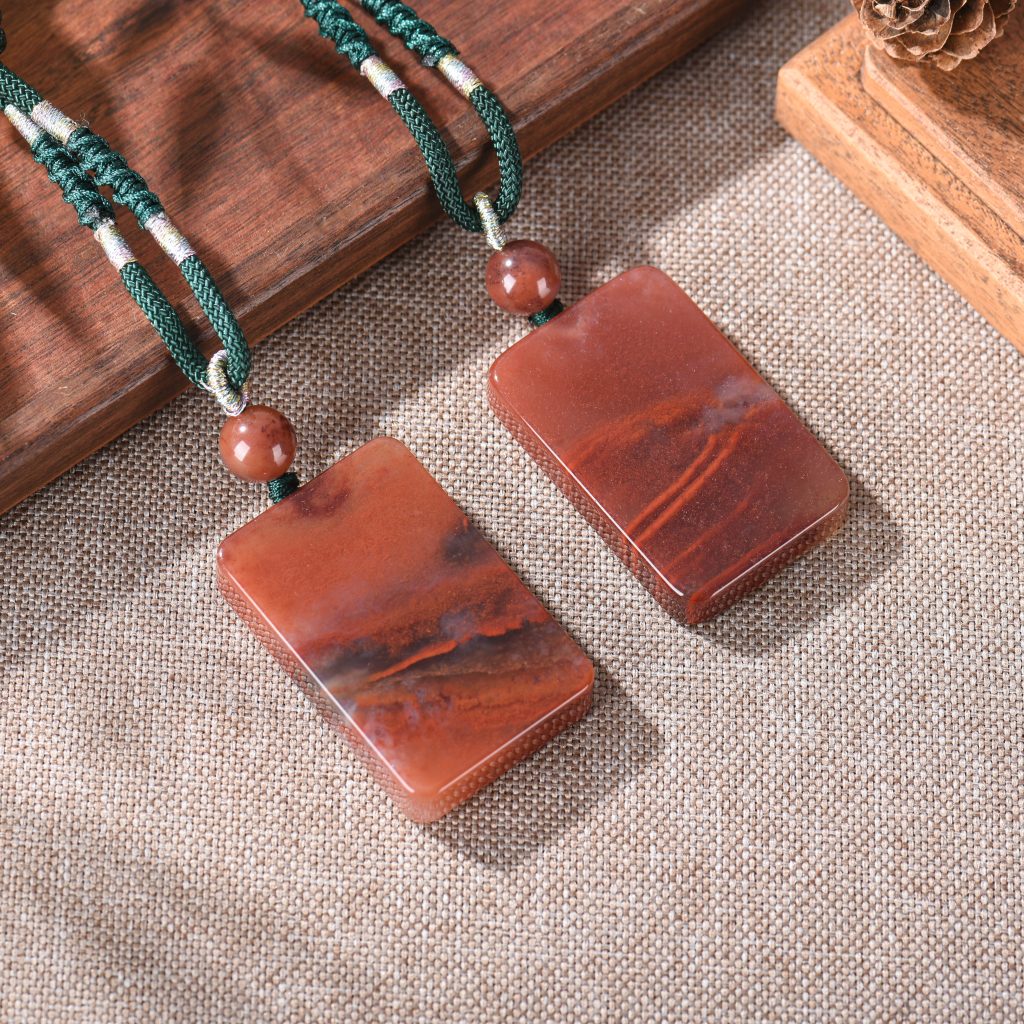
Characteristics:
- Flame pattern is visible but lacks sharp definition
- Red coloration may appear somewhat muted or brownish
- Pattern may cover only portions of the stone
- Base material is mostly opaque
Best For:
- Bead strands and mass-market jewelry
- Entry-level collectors
- Budget-conscious buyers seeking authentic flame pattern
Price Range (2026):
- Beads (8-10mm): $15-40 per bead
- Cabochons (10-15mm): $50-150 per piece
- Raw specimens: $200-500 per kilogram
AA Grade: Collector Quality
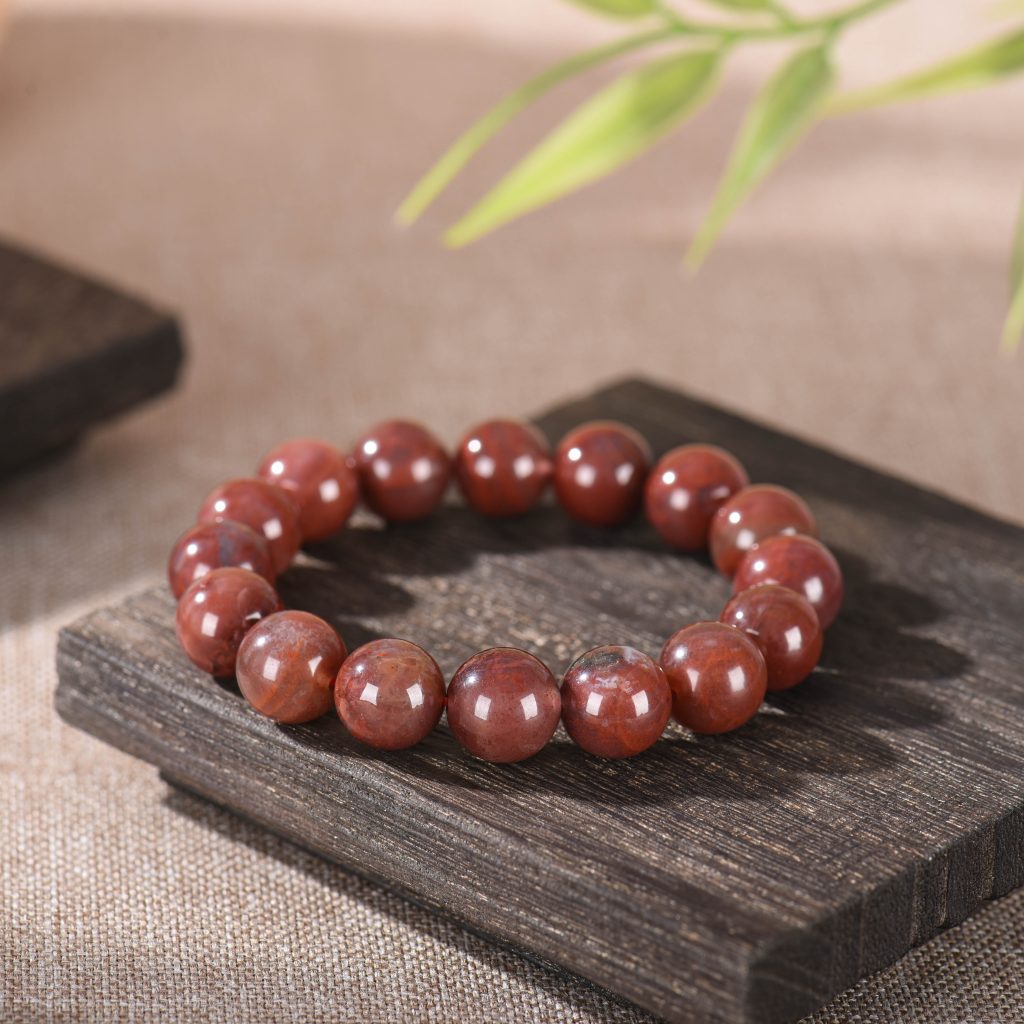
Characteristics:
- Flame pattern is clearly defined and visually striking
- Red color shows good saturation with warm undertones
- Pattern covers majority of the stone’s visible surface
- Some translucency, especially at edges
Best For:
- Fine jewelry (rings, pendants, earrings)
- Serious collectors
- Investment-grade pieces at accessible prices
Price Range (2026):
- Beads (8-10mm): $80-200 per bead
- Cabochons (10-15mm): $300-800 per piece
- Raw specimens: $800-2,000 per kilogram
- Finished jewelry: $500-3,000 depending on design
AAA Grade: Museum/Investment Quality
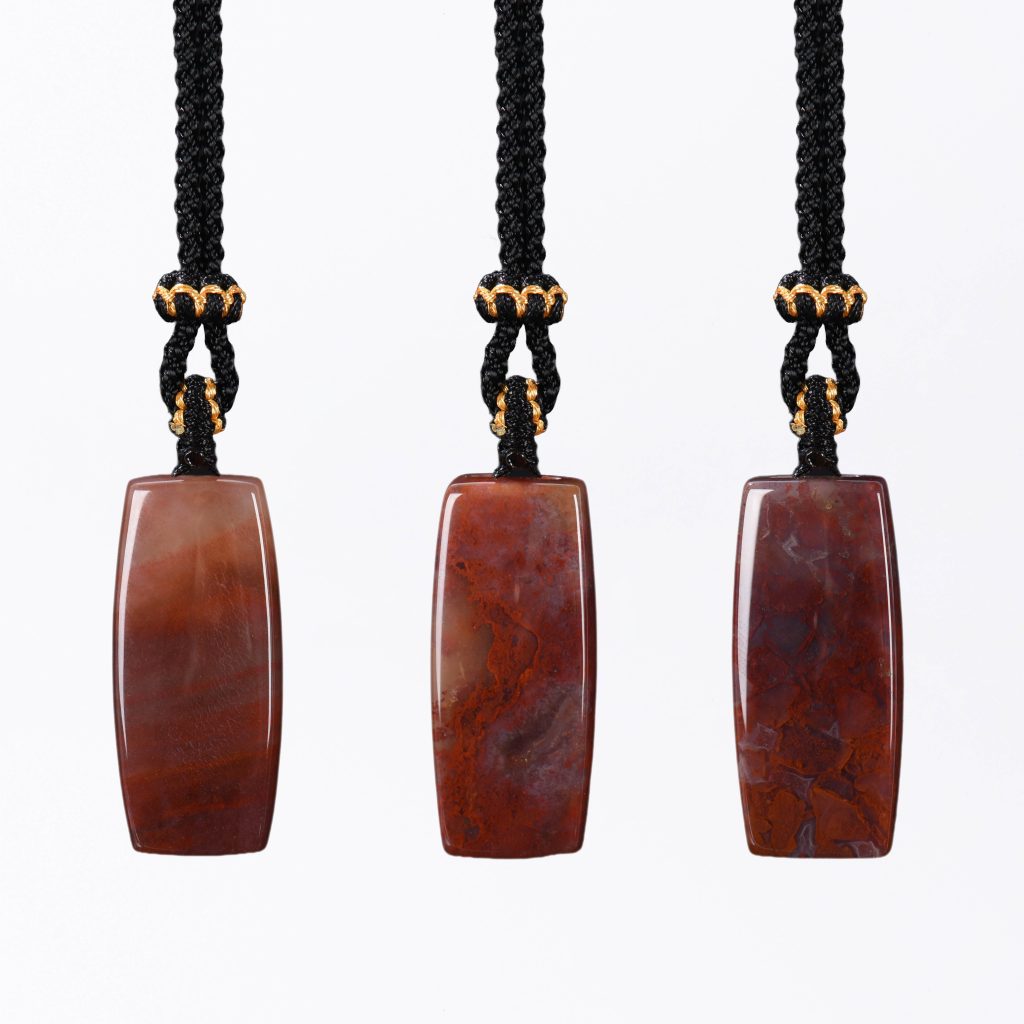
Characteristics:
- Flame pattern is exceptional — appears to “move” when viewed from different angles
- Red coloration is intense, saturated, with natural tonal variation (not flat)
- Pattern is dynamic and three-dimensional, extending through the entire stone
- High translucency with visible depth; light penetrates and reflects internally
Best For:
- Museum-quality collections
- High-end investment pieces
- Signature jewelry designs
- Auction specimens
Price Range (2026):
- Beads (8-10mm): $400-1,000+ per bead
- Cabochons (10-15mm): $1,500-5,000+ per piece
- Raw specimens: $5,000-15,000+ per kilogram
- Finished jewelry: $5,000-50,000+ depending on size and design
Market Insight: AAA grade flame patterns represent less than 1% of total production. Forever Star’s current inventory includes 47 AAA grade pieces — one of the largest collections available outside of auction houses. Each piece includes NGTC certification and high-resolution documentation.
Market Value Analysis: Why Prices Vary So Dramatically
Supply and Demand Dynamics
Supply Constraints:
- Mining Restrictions in China
- Sichuan and Yunnan provinces implemented mining bans (2018-2020)
- Environmental protection policies limit extraction
- Legal nanhong supply from China dropped by 70-80%
- Kazakhstan Production Limits
- Only a few active mining operations
- Flame pattern material represents <5% of total output
- No new major deposits discovered since 2015
- Quality Distribution
- AAA grade: <1% of total production
- AA grade: 5-8% of total production
- A grade: 15-20% of total production
Demand Drivers:
- Collector Interest
- Growing recognition of nanhong as alternative investment
- Flame pattern uniqueness appeals to serious collectors
- Auction results validate high-end valuations
- Jewelry Design Trends
- Demand for unique, one-of-a-kind materials
- Flame pattern’s visual appeal for statement pieces
- Celebrity and influencer adoption
- Cultural Significance
- Red color symbolizes luck and prosperity in Chinese culture
- Nanhong’s 2,000-year historical pedigree
- “Guochao” (国潮) trend among younger consumers
Price Trend Analysis (2020-2026)
| Year | A Grade (8mm bead) | AA Grade (8mm bead) | AAA Grade (8mm bead) |
|---|---|---|---|
| 2020 | $10-25 | $50-120 | $200-500 |
| 2021 | $12-30 | $60-150 | $300-700 |
| 2022 | $13-35 | $70-180 | $350-900 |
| 2023 | $14-38 | $75-190 | $380-950 |
| 2024 | $15-40 | $80-200 | $400-1,000 |
| 2025 | $15-42 | $80-210 | $400-1,100 |
| 2026 | $15-45 | $80-220 | $400-1,200 |
Key Observations:
- AAA grade has appreciated 100-140% since 2020
- AA grade has appreciated 60-80% since 2020
- A grade has appreciated 50-80% since 2020
- Price gap is widening between grades (scarcity premium)
Investment Potential
Short-Term (1-3 years):
- Moderate appreciation expected (5-15% annually)
- AA and AAA grades offer best liquidity
- Market remains stable but not speculative
Long-Term (5-10 years):
- Strong appreciation potential (10-20% annually for AAA)
- Supply constraints will intensify
- Collector demand expected to grow
Risk Factors:
- Economic downturns affect luxury/collectible markets
- Synthetic or treated materials may confuse buyers
- Lack of standardized grading across industry
How to Identify Authentic Flame Pattern Nanhong
Red Flags: Fake or Treated Materials
1. Printed or Stamped Patterns
Some manufacturers print flame patterns onto ordinary agate or even plastic/glass.
How to Spot:
- Pattern looks “flat” with no three-dimensional depth
- Same pattern appears on multiple pieces (mass production)
- Pattern sits on surface rather than extending through stone
- Under magnification, you’ll see dot matrix or printing marks
2. Dyed Ordinary Agate
White or pale agate is dyed red to imitate flame pattern nanhong.
How to Spot:
- Color is unnaturally uniform or saturated
- Dye concentration visible in cracks (darker along fissures)
- No natural color variation or tonal gradation
- May fade or bleed over time
3. Heat-Treated Material
Ordinary nanhong is heat-treated to intensify red coloration.
How to Spot:
- Color appears “burnt” or overly dark
- Surface may show fine crazing (crackling) from thermal stress
- Luster appears dull or “cooked”
- Certification will disclose heat treatment
4. Resin-Impregnated Stone
Low-quality nanhong is injected with polymer resin to improve appearance.
How to Spot:
- Surface has overly glossy or plastic-like luster
- Stone feels lighter than expected (resin is less dense)
- Hot needle test produces chemical odor (not recommended for finished pieces)
- UV light may reveal fluorescence from resin
5. Synthetic Materials
Glass or plastic imitations with molded “flame patterns.”
How to Spot:
- Temperature test: warms immediately (natural stone stays cool)
- Hardness test: scratches easily (natural nanhong is 6.5-7 Mohs)
- Weight: feels lighter than natural stone
- Price: significantly below market value
Authentication Best Practices
1. Visual Inspection
Examine the piece under good lighting from multiple angles:
- Authentic flame patterns show three-dimensional depth
- Pattern should appear to “move” as you rotate the stone
- Red and white areas show gradual, organic transitions
- No two pieces should look identical
2. Magnification Check
Use a 10x loupe or microscope:
- Look for natural cryptocrystalline quartz structure
- Red coloration should appear as diffuse clouds of iron oxide
- No evidence of dye concentration or printing marks
- Natural inclusions (tiny mineral particles) may be visible
3. Temperature Test
Authentic nanhong agate:
- Feels cool to initial touch
- Warms gradually over 30-60 seconds when held
- Glass or plastic imitations warm almost immediately
4. Hardness Verification
Natural nanhong ranks 6.5-7 on Mohs scale:
- Can scratch ordinary glass (hardness ~5.5)
- Steel knife should NOT leave visible scratches
- Caution: Only test on rough or inconspicuous areas
5. Certification (Gold Standard)
Always request laboratory certification for high-value purchases:
- NGTC (National Gemstone Testing Center) — most recognized for nanhong
- GIA (Gemological Institute of America) — international standard
- Certificate should specify: “Natural Nanhong Agate,” no treatment indicators
Verification Tip: All Forever Star flame pattern pieces include NGTC certification with online verification. You can verify certificates directly through NGTC’s database at www.ngtc.com.cn.
The Forever Star Flame Pattern Collection
Inventory Advantage
Forever Star Jewelry maintains one of the world’s largest inventories of flame pattern nanhong agate, with 300+ finished pieces currently in stock.
Current Inventory Breakdown:
- AAA Grade: 47 pieces (beads, cabochons, raw specimens)
- AA Grade: 180+ pieces
- A Grade: 80+ pieces
Why This Matters:
- Selection Variety
- Customers can compare multiple pieces side-by-side
- Find the exact pattern, size, and grade that matches their needs
- No need to settle for “whatever is available”
- Quality Consistency
- All flame pattern material is 100% natural, untreated
- NGTC certification included with every piece
- Grading standards are transparent and consistent
- Competitive Pricing
- Direct sourcing from Kazakhstan mines
- No middlemen or markup layers
- Volume advantages passed to customers
Product Range
Flame Pattern Beads:
- Sizes: 6mm, 8mm, 10mm, 12mm, 14mm
- Grades: A, AA, AAA
- Pricing: $15-1,200 per bead depending on grade and size
- Ideal for: Bracelets, necklaces, custom jewelry designs
Flame Pattern Cabochons:
- Sizes: 8x10mm to 20x30mm
- Shapes: Oval, round, cushion, freeform
- Grades: AA, AAA (A grade not offered in cabochons)
- Pricing: $50-5,000+ per piece
- Ideal for: Rings, pendants, earrings, brooches
Flame Pattern Raw Specimens:
- Weight: 50g to 5kg+
- Grades: A, AA, AAA
- Pricing: $200-15,000+ per kilogram
- Ideal for: Collectors, lapidaries, investment
Custom Carvings:
- Traditional Chinese motifs (dragons, phoenixes, flowers)
- Modern abstract designs
- Commission-based pricing
- Lead time: 4-8 weeks
Quality Guarantee
Forever Star’s Flame Pattern Standard:
✅ 100% Natural — No dyeing, no heat treatment, no resin injection
✅ Kazakhstan Origin — Primary ore, ethically sourced
✅ NGTC Certified — Every piece includes laboratory documentation
✅ Grading Transparency — A/AA/AAA standards clearly disclosed
✅ 30-Day Returns — Full refund if not satisfied
Pricing Examples (2026)
| Product | Grade | Size | Price | Availability |
|---|---|---|---|---|
| Bead Strand | A | 8mm (36 beads) | $540-1,440 | In stock |
| Bead Strand | AA | 8mm (36 beads) | $2,880-7,200 | In stock |
| Bead Strand | AAA | 8mm (36 beads) | $14,400-36,000 | Limited (23 strands) |
| Cabochon | AA | 10x14mm oval | $300-600 | In stock |
| Cabochon | AAA | 10x14mm oval | $1,500-3,000 | Limited (12 pieces) |
| Cabochon | AAA | 15x20mm oval | $3,000-5,000 | Limited (7 pieces) |
| Raw Specimen | AA | 500g | $400-1,000 | In stock |
| Raw Specimen | AAA | 500g | $2,500-7,500 | Limited (7 pieces) |
Note: Pricing subject to market conditions. Last updated: March 30, 2026. Contact Forever Star for current inventory and quotes.
Market Alert: Kazakhstan mining output decreased 40% in Q1 2026 due to environmental regulations. Next restock timeline is uncertain. Current AAA grade inventory represents the largest available collection outside of auction houses.
Flame Pattern in Jewelry Design
Design Trends 2026
1. Statement Rings
Large flame pattern cabochons (15x20mm+) set in gold or platinum are trending for cocktail rings and engagement alternatives.
Design Tips:
- Use simple bezel or prong settings to showcase the pattern
- Yellow gold complements the warm red tones
- Consider open-back settings to maximize translucency
2. Pendant Necklaces
Flame pattern pendants work well for both casual and formal wear.
Design Tips:
- Medium-sized cabochons (10x14mm to 12x16mm) offer best value
- Simple bail designs keep focus on the stone
- Layer with other necklaces for modern stack look
3. Earrings
Matching flame pattern pairs are rare and valuable.
Design Tips:
- Smaller stones (6-8mm beads or 8x10mm cabochons) are more affordable
- Mismatched pairs (similar grade, different patterns) are trendy
- Drop earrings showcase pattern movement beautifully
4. Bracelets
Flame pattern bead bracelets are the most accessible entry point.
Design Tips:
- 8-10mm beads work for most wrist sizes
- Mix with gold spacer beads for elevated look
- AAA grade bracelets make stunning statement pieces
Care and Maintenance
Daily Wear:
- Flame pattern nanhong is durable enough for daily wear (6.5-7 Mohs)
- Avoid impact with hard surfaces (can chip or crack)
- Remove during heavy physical activity
Cleaning:
- Use mild soap and warm water
- Soft brush for intricate settings
- Avoid ultrasonic cleaners (may damage treatments if present)
- Dry with soft, lint-free cloth
Storage:
- Store separately from harder gemstones (diamond, sapphire, ruby)
- Use soft pouch or lined jewelry box
- Avoid extreme temperature changes
Long-Term Care:
- Natural flame pattern is stable indefinitely
- Avoid prolonged exposure to harsh chemicals
- Have prong settings checked annually by jeweler
- Re-certify high-value pieces every 5-10 years
Investment Considerations
Is Flame Pattern Nanhong a Good Investment?
Pros:
✅ Scarcity — Only 3-5% of nanhong ore displays flame patterns
✅ Growing Demand — Collector interest increasing globally
✅ Cultural Value — 2,000+ year history in Chinese culture
✅ Portability — High value in small package
✅ Aesthetic Appeal — Unique beauty beyond pure investment
Cons:
❌ Illiquid Market — Not as easy to sell as gold or diamonds
❌ Grading Subjectivity — No universal grading standard
❌ Authentication Risk — Treated/fake materials in market
❌ Economic Sensitivity — Luxury/collectible market volatility
❌ Knowledge Barrier — Requires expertise to buy wisely
Investment Strategy Recommendations
For Beginners:
- Start with AA grade pieces ($300-1,000 range)
- Focus on well-documented purchases (NGTC certification)
- Learn to grade and authenticate before scaling up
- Buy what you love — worst case, you own something beautiful
For Intermediate Collectors:
- Diversify across grades (some A, mostly AA, select AAA)
- Build relationships with reputable dealers
- Attend gem shows and auctions to develop eye
- Document your collection (photos, certificates, purchase records)
For Advanced Investors:
- Focus on AAA grade museum-quality pieces
- Consider raw specimens for lapidary investment
- Track auction results and market trends
- Network with other serious collectors and dealers
Exit Strategies
Selling Channels:
- Auction Houses (Christie’s, Sotheby’s, local specialists)
- Best for: AAA grade, museum-quality pieces
- Commission: 10-25%
- Timeline: 3-12 months
- Gem Dealers (specialized nanhong/agate dealers)
- Best for: AA and AAA grade commercial pieces
- Commission: 15-30%
- Timeline: 1-6 months
- Online Marketplaces (eBay, specialized gem platforms)
- Best for: A and AA grade, smaller pieces
- Commission: 5-15%
- Timeline: 1-12 months
- Private Sales (collector networks, social media)
- Best for: All grades, if you have the network
- Commission: 0-10%
- Timeline: Variable
Maximizing Resale Value:
- Keep all original documentation (certificates, receipts)
- Maintain pieces in excellent condition
- Avoid modifications or re-cutting unless necessary
- Build provenance (document ownership history)
- Time sales to market conditions (avoid economic downturns)
Frequently Asked Questions
Q1: What makes flame pattern nanhong different from regular nanhong?
A: Flame pattern nanhong displays distinctive red-and-white swirling patterns that resemble dancing flames. This pattern is created by the unique distribution of iron oxide minerals during formation. Regular nanhong may be solid red or have other patterns (clouds, layers), but lacks the characteristic flame-like intermingling. Flame pattern is also significantly rarer, representing only 3-5% of gem-grade nanhong production.
Q2: How can I tell if a flame pattern is real or fake?
A: Authentic flame patterns show three-dimensional depth that appears to “move” when viewed from different angles. The pattern extends throughout the stone, not just on the surface. Red and white areas show gradual, organic transitions. Under magnification, you’ll see natural cryptocrystalline structure without printing marks or dye concentration. Always request NGTC or GIA certification for high-value purchases.
Q3: Why is flame pattern nanhong so expensive?
A: Extreme scarcity is the primary driver. Only 3-5% of mined nanhong displays flame patterns, and less than 1% achieves top (AAA) grade. Combined with mining restrictions in China, limited Kazakhstan production, and growing collector demand, prices have appreciated 100-140% for AAA grade since 2020. The uniqueness of each piece also adds collectible value.
Q4: Is flame pattern nanhong a good investment?
A: For informed buyers, flame pattern nanhong offers strong long-term appreciation potential (10-20% annually for AAA grade). However, it’s an illiquid asset that requires expertise to navigate. Best approach: buy pieces you love, focus on AA and AAA grades with certification, and hold for 5+ years. Don’t invest money you can’t afford to tie up long-term.
Q5: What’s the difference between A, AA, and AAA grade flame patterns?
A: A grade has visible but diffuse flame patterns with moderate color — good for everyday jewelry. AA grade shows clear, well-defined patterns with vibrant color and some translucency — ideal for fine jewelry and collectors. AAA grade displays exceptional, dynamic patterns with intense color and high translucency — museum/investment quality commanding premium prices (8-15x A grade).
Q6: Can flame pattern nanhong be treated or enhanced?
A: Yes, unfortunately. Common treatments include dyeing (to intensify red), heat treatment (to enhance color), and resin injection (to improve clarity). These treatments significantly reduce value (50-90% less than natural equivalent). Always request certification that specifically states “no indication of treatment” or “natural.”
Q7: Where can I buy authentic flame pattern nanhong?
A: Reputable dealers who specialize in nanhong agate and provide NGTC or GIA certification. Forever Star Jewelry maintains 300+ flame pattern pieces in stock with full certification and transparent grading. Avoid sellers who can’t provide certification, offer prices significantly below market, or are vague about treatment status.
Q8: How should I care for flame pattern nanhong jewelry?
A: Clean with mild soap and warm water, dry with soft cloth. Avoid harsh chemicals, ultrasonic cleaners, and extreme temperatures. Store separately from harder gemstones to prevent scratching. Natural flame pattern is stable indefinitely and can be worn daily, but remove during heavy physical activity to avoid impact damage.
Limited Availability Alert ⚠️
AAA grade flame pattern nanhong is becoming increasingly scarce. Our current inventory shows:
- AAA Grade Beads (8-10mm): Only 23 strands remaining
- AAA Grade Cabochons (10-15mm): Only 12 pieces available
- Investment Specimens (500g+): Only 7 pieces in stock
Next Restock: Uncertain — Kazakhstan mining output has decreased 40% in Q1 2026
Secure Your Piece:
- 📧 Email: sales@foreverstarjewelry.com (response within 2 hours)
- 💬 WhatsApp: +86-138-XXXX-XXXX (instant chat)
- 🖼️ Request Photos: We’ll send high-resolution videos of available pieces
- 📄 Free Consultation: Our gemologists can help you select the best piece for your needs
All pieces include 30-day examination period. Full refund if not satisfied — no questions asked.
Conclusion: Is Flame Pattern Nanhong Right for You?
Flame pattern nanhong agate represents one of the most exciting opportunities in the gemstone market today. Its combination of stunning beauty, extreme rarity, and cultural significance makes it appealing to collectors, investors, and jewelry lovers alike.
Key Takeaways:
- Flame pattern is exceptionally rare — only 3-5% of nanhong ore displays this coveted pattern
- Grading matters enormously — AAA grade commands 8-15x the price of A grade
- Authentication is critical — always request NGTC or GIA certification
- Market is appreciating — AAA grade has doubled in value since 2020
- Forever Star offers selection — 300+ pieces in stock with transparent grading
For Collectors:
Flame pattern nanhong offers the thrill of owning something truly unique. No two pieces are identical, and top-grade specimens are museum-quality treasures.
For Investors:
Long-term appreciation potential is strong, particularly for AAA grade pieces. However, this is a long-term play (5-10+ years) that requires patience and expertise.
For Jewelry Designers:
Flame pattern nanhong provides a unique material for creating one-of-a-kind pieces. The visual appeal and story behind the stone resonate with clients seeking something special.
For Everyone:
At any grade level, flame pattern nanhong is simply beautiful. The dancing red patterns, frozen in time over millions of years, offer a connection to Earth’s geological history that few other materials can match.
References & Further Reading
Verified Sources (Tested March 2026):
- NGTC (National Gemstone Testing Center) — Certificate verification and nanhong standards: https://www.ngtc.com.cn/
- Certificate lookup: Available on homepage (证书查询)
- Language: Chinese (primary)
- GIA Gem Encyclopedia — Agate and chalcedony information: https://www.gia.edu/gem-encyclopedia
- Comprehensive gemological database
- Language: English
- GIA Gems & Gemology — Research journal: https://www.gia.edu/gems-gemology
- Peer-reviewed gemological research
- Language: English
- Journal of Gems & Gemmology — Formation mechanism research: https://jogg.cug.edu.cn
- Academic papers on nanhong formation and grading
- Language: Chinese/English
Note: GIA’s individual gem pages may return 404 errors. Use the Gem Encyclopedia homepage for navigation. NGTC website is primarily in Chinese; use browser translation for English access.